I want to tell you a story. A story about how one image—one bold, provocative, controversial cover—became a lightning rod not just for Sabrina Carpenter, but for how we police women’s voices, feelings, and interpretations. It’s not just about me. It’s about how any survivor, any person with trauma, any person with nuance is expected to choose one read and shut up.
This is not a Sabrina Carpenter takedown, nor is it a total seal of approval. I enjoy her music and her style. What fascinates me about her Man’s Best Friend album cover is how it sparks opposite reactions: empowerment for some, discomfort for others, and in my case, a social media pile-on that revealed just how unwilling people are to hold multiple interpretations at once.
Keep reading. This might not go the direction you expect.
The Image, the Reaction, the Rules of the Game
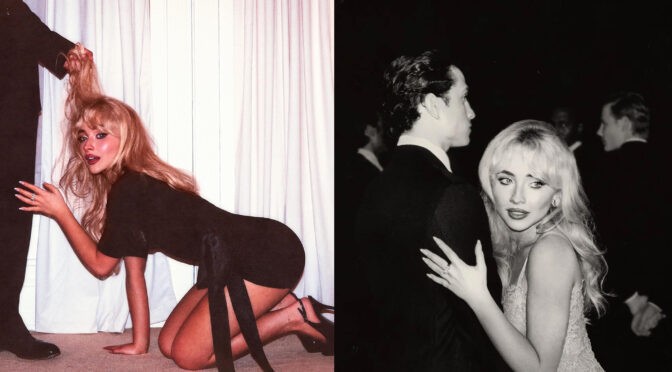
It began with the album cover itself: Carpenter on all fours in a black mini dress, a suited man off-frame dragging a fistful of the ends of her blond hair. That cover didn’t just hint at submission or objectification, it leaned into tropes of pet-like posturing, dominance, hair-pulling, and control.
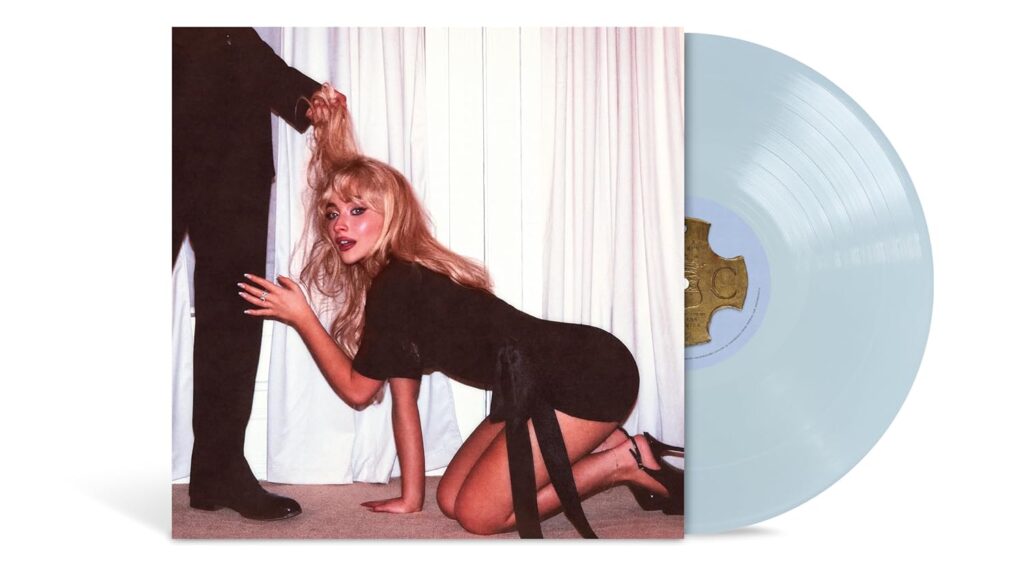
It is a powerful visual that asks:
Who is doing the looking, and who is being looked at?
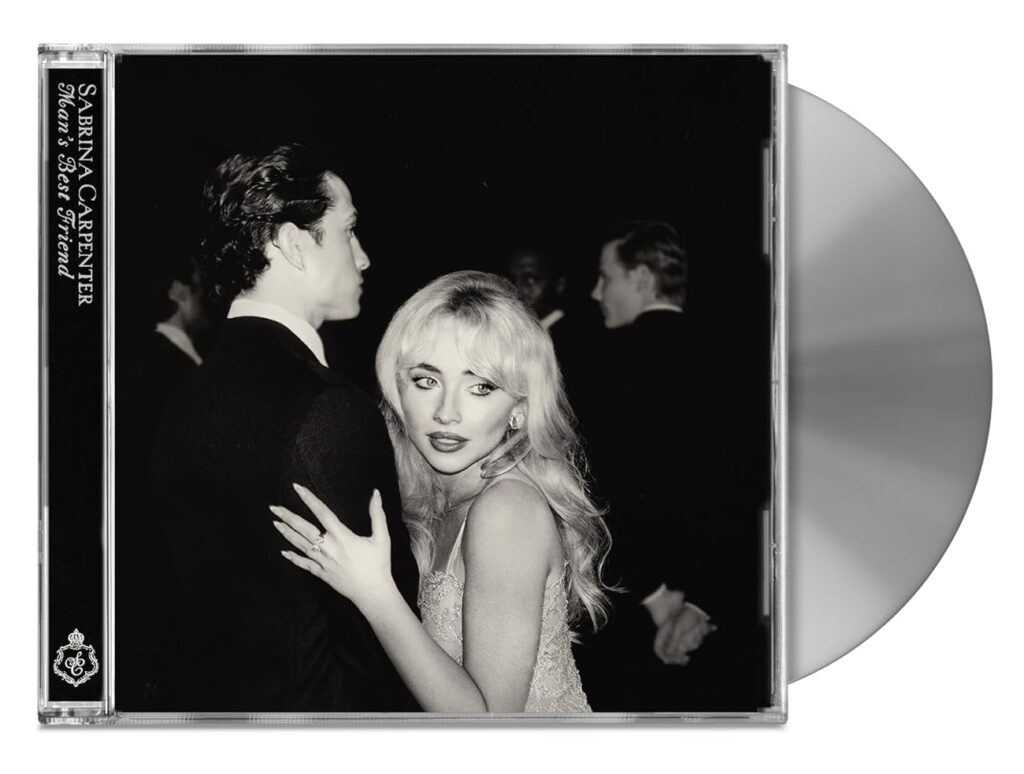
Some defended it as satire, irony, or shock value. Others saw it as regressive. Glasgow Women’s Aid even called it “pandering to the male gaze” and “regressive,” citing its element of control and violence. Carpenter later released alternate covers calling one “approved by God,” which signals that she was already aware of, and leaning into, the controversy.
From the start, it is not obvious which side she’s on. But that ambiguity is part of the power.
A few weeks later, she brought Drag Race queens and trans rights signs to her MTV VMA performance. One commenter summed up the dissonance: “Making up for that tone-deaf album cover?” And it was not an outlier opinion.
My Initial Response (and Why It Mattered)
The firestorm didn’t begin in a vacuum. It started with a social media post of Sabrina Carpenter’s Man’s Best Friend album cover.
In the comments, someone wrote:
“Women: Stop viewing us as sexual objects.
Also women: ”
That’s where I entered the thread with a classic “me” response. I said:
“Just because some women have internalized misogyny doesn’t mean they all do or [that it] makes it okay. I look at this photo and I see domestic violence, and it’s disturbing.”
When I first saw it, the image brought domestic abuse to mind, not because I believe kink = abuse, but because the stylistic choices and framing can trigger that impression.
After one woman commented that they see two consenting adults, I replied, “It certainly can be, but my opinion is that it looks different from that. I’m certainly not opposed to kink (he really should be grabbing her hair by the roots). And [I’ve] experienced domestic violence and seen it in many others, [and] the style of this visual triggers that impression.”
I’m not a prude or against kink or BDSM when it’s practiced ethically and consensually. As seen above, I offered advice that (if the intent is role play rather than harm) hair should be pulled closer to the root, to avoid the non-pleasureful sort of pain (unless you’re into that kind of thing… I won’t kink shame). My point was never to condemn sexuality, but to share one possible reading of the picture. But these days, especially on social media, it seems people are always looking for a fight, and nuance is a blood sport.
Rather than a debate, what followed was a pile-on of ad hominem attacks and distortions.
The first reply dropped in a meme of Ronald McDonald on a phone saying, “Hello madam? Your abortion is still alive and it’s posting stupid shit on Facebook.” That moment set the tone for what I now call the “Sabrina dogpile”: a cascade of ridicule, deflection, and bad-faith arguments aimed not at engaging with my point, but at silencing it.
I was mocked, accused of “dumping trauma,” dismissed as hysterical, told to get therapy, called out for “playing the victim.” Others mutated my argument, claiming I said things I never said. Some even weaponized their own trauma to try to invalidate mine. One person accused me of being “mid-transition” even though I’m not. That cruelty was irrelevant, but it was also bigoted.
When I shared a minuscule mention of my own experience with DV, I was not trying to forever cast myself as a victim. I was offering context for why the image hit me the way it did, and to voice concern for women who might be triggered, because I know how much suffering PTSD causes.
I also worried the cover could backfire, feeding into the already heavy stream of violent porn and objectification saturating entertainment. But expressing concern isn’t a call for pitchforks and record burnings.
These were not thoughtful disagreements; they were attempts to shut down the conversation altogether. And that’s the larger issue: when women raise perspectives shaped by trauma, the response is often not dialogue but dismissal, a cultural reflex that polices how and when we are “allowed” to speak.
I replied to one commenter, “And I was simply sharing my perspective. The experiences I went through are shared by countless women. But you should understand that I’m not looking at this from one angle. I like Sabrina Carpenter, and I’m not telling anyone what to do – unlike you, who thinks you are entitled to tell me what to do… making you a hypocrite.”
Here is something worth stating plainly: the kind of backlash I faced (mockery, dismissal, emotional invalidation for sharing a trauma-informed perspective) is not unique to me. It is part of the cost of speaking as someone who has survived or lives with trauma.
Any woman, any person who has experienced harm in their life, is often forced into an emotional straightjacket: either stay quiet or risk being mocked for caring.
There is a frustrating double standard at play. When women express strong emotions, especially around sexuality or violence, they are often labeled as hysterical, “dried up”, or attention-seeking. But when men express anger, offer critique, or even share trauma, it is more likely to be seen as bold, brave, or intellectual. Women are expected to make every emotion palatable, every insight charming, and every critique inoffensive. That is not just unrealistic. It is silencing.
I should also note that years ago, I was more reactive. I had almost zero tolerance for imagery that even resembled objectification. But I have done exposure therapy, and it helped me regulate my nervous system and process trauma triggers. Some might dismiss that as proof my perspective is invalid. I see it as the opposite: it gave me the tools to hold multiple interpretations at once. I can see how some read this image as empowerment, while also recognizing how it could hit others as violence. And to be clear, I am still morally and ethically opposed to objectification.
For those who want a deeper dive into the difference between being empowered and being objectified: I recommend Dr. Caroline Heldman’s TEDx talk. She unpacks how objectification harms women, even when it’s dressed up as empowerment, and why that distinction matters now more than ever.
Many of the voices in that thread likely weren’t even fans of Sabrina. They were not making arguments grounded in her discography or artistic intent. They were using her and me as proxies to defend or attack generalized ideas about women. They criticized the image and simultaneously used it as an excuse to criticize me, and women in general.
That is signal-shaming: punishing someone simply for raising a perspective that challenges the group consensus.
That is what the dogpile revealed: not a disagreement about art, but a reflex to silence women who refuse to flatten their perspectives.
But amid the pile-on, one comment stood out: “I see that too.“ It was brief, but meaningful. Even a lone voice of agreement underscored that my reaction was not an anomaly. It reflected a truth that others could recognize, even if they did not shout it as loudly.
The Turn: Listening, Reading, Noticing
It was listening to the album that made me appreciate the depth of the contrast between album cover image and content. At first glance, the cover screams “submission.” But the songs? They bite back.
Take “Manchild.” It is not a love ballad. It mocks men for emotional immaturity, for failing at basic behavior. “Won’t you let an innocent woman be?” she coos, layering sweetness over critique. The song begins with:
“You said your phone was broken, just forgot to charge it
Whole outfit you’re wearing, God, I hope it’s ironic
Did you just say you’re finished? Didn’t know we started
It’s all just so familiar, baby, what do you call it?”
Or look at “Tears.” It leans disco, but lyrically it is razor-sharp: she jokes that a man being basically competent is enough to arouse her. It’s satire with a sting. In the music video, she pole dances while singing the song with lyrics like, “I get wet at the thought of you / being a responsible guy”—a cheeky juxtaposition of hypersexualized performance and exasperated standards. The video also features drag performers and trans representation, underlining her alignment with queer visibility and layered self-expression.
She frames themes of heartbreak, anger, desire, disappointment. There is self-critique in there too, not just projection. In interviews, she has said the cover was about control: “being in on your lack of control and when you want to be in control.”
That said, not every message in Carpenter’s broader discography screams feminist solidarity…
For example, I initially thought the track “Taste” from her sixth studio album Short n’ Sweet (2024) was about being a side chick—and I was not alone. A quick scroll through fan reactions shows that others had the same first impression. With lyrics like this, it is understandable:
“You’re wonderin’ why half his clothes went missin’
My body’s where they’re at”“I heard you’re back together and if that’s true
You’ll just have to taste me when he’s kissin’ you”
But a closer read suggests something different: she is not actively seeing someone else’s partner, she’s reflecting on a past dynamic. The lyric “Now I’m gone” suggests she is out of the picture. So while the tone is still petty and provocative, it does not depict her as a willing side chick—more like a thorn in the side of someone’s reconciliation. It is cheeky, bold, and not without controversy.
Back to Man’s Best Friend: While the album plays with biting commentary, it is important to acknowledge that there are many different schools of feminism, each offering its own lens through which to interpret provocative imagery (and many other things, such as sex work, fashion, or performative femininity).
I also question whether the bait-and-switch strategy works. The men drawn in by the album cover are not the ones most likely to hear themselves in the lyrics and make adjustments. They are the ones most likely to mock it. Instead of confronting their behavior, they will dismiss the message as “man-hating.” It is certainly not the most biting feminist music I have ever heard, but perhaps that accessibility is part of the point. For a few listeners who would never otherwise engage with feminist critique, it could plant a seed. More often, though, it risks reinforcing the very dynamics it set out to subvert.
To some, visual boldness (whether in fashion, posture, or persona) is a way to reclaim space traditionally policed by patriarchy. To others, it can read as a perpetuation of harmful archetypes, depending on how and where the power is situated.
These perspectives are not contradictions; they are reflections of different lived experiences, cultural contexts, and feminist priorities.
And they raise an important question:
If Sabrina Carpenter’s cover invites such polarized readings, how do other artists navigate the same terrain?
Kate Nash, Performance, and the Politics of Self-Exposure
There are far too many of these perspectives to fully capture in one article. But the fact that they coexist doesn’t weaken feminist discourse, it strengthens it. These tensions challenge us to expand our thinking, to recognize that empowerment looks different for different people.
Take Kate Nash, for example. In 2023, she launched an OnlyFans campaign called “Butts for Tour Buses” to fund her tour independently. She had not released an album since 2013, and I had often wondered what had happened to her until this campaign put her back in the headlines. (She has since returned with a new album in 2024: 9 Sad Symphonies.)
“If you work in the music business or care about music you should repost this and tag @spotify @spotifyuk & @livenation @livenationuk or start your own protest. It’s time to start being vocal without worrying about being punished. They’ve built an ivory tower & they’ve leaving artists behind, it’s unethical & unsustainable. Album countdowns, playlists & billboards don’t cut it anymore. The music industry needs to pay up. I’m not scared to be vocal & neither should you be.”
Kate Nash on an Instagram reel in which she took her tour bus to outside the London offices of Spotify, Live Nation, and the Houses Of Parliament
In my early twenties, she was one of several artists that made me feel finally solidarity as a feminist, alongside: Emilie Autumn, Angelspit (while Amelia Arsenic was in the band), Lily Allen, and Amanda Palmer. (Palmer, of course, now comes with her own controversies, particularly surrounding whether she was culpable in her ex-husband Neil Gaiman’s alleged sexual assaults and coercion. This has forced me into a lot of uncomfortable re-examination.)
Back then, I listened to her 2007 Made of Bricks album on repeat and had formed an idea of who she was. I didn’t expect this campaign from her at all, either because I had not truly familiarized myself with who she was, or perhaps because she has evolved while in survival mode. (I have been there.) So when I saw the campaign, it surprised me, and many other fans have expressed shock and disappointment.
But Kate Nash’s campaign is not exactly about titillation, it is a performance art critique on how artists are forced to commodify themselves to survive in the streaming era. She used the platform to blur the line between objectification and authorship, showing how the music industry often demands exposure without offering security. And because sex sells, it was also a very smart move to draw more attention to the issue. Her message: if you’re going to sell my image, I want to be the one selling it.
Emilie Autumn
Nash turned the commodification of her image into protest. But the emotional cost of that commodification, and of being hyperaware in a world that constantly objectifies and flattens women, is something artists like Emilie Autumn have long captured in their work. Like Nash, Autumn often used sexuality as part of her performances, though in her case it was laced with Victorian aesthetics, burlesque, and gothic spectacle.
In her track “Opheliac,” Autumn delivers this haunting spoken passage:
“Studies show:
Intelligent girls are more depressed
Because they know
What the world is really like
Don’t think for a beat it makes it better
When you sit her down and tell her
Everything’s gonna be all right
She knows in society she either is
A devil or an angel with no in between
She speaks in the third person
So she can forget that she’s me”
These lines reflect how impossible it can feel to exist authentically in a system that asks women to be both marketable and morally acceptable, yet never too loud, too sad, too smart, or too real.
Art, Ownership, and Misunderstanding
These kinds of artistic choices—like Nash’s, or perhaps Carpenter’s—don’t come from a monolith of feminism. And I know firsthand how complex this conversation can be.
In the past, I’ve been called a hypocrite for doing pole dance, as well as one burlesque show, and one go-go dance performance, and for sharing my dance content and amateur alternative modeling on social media.
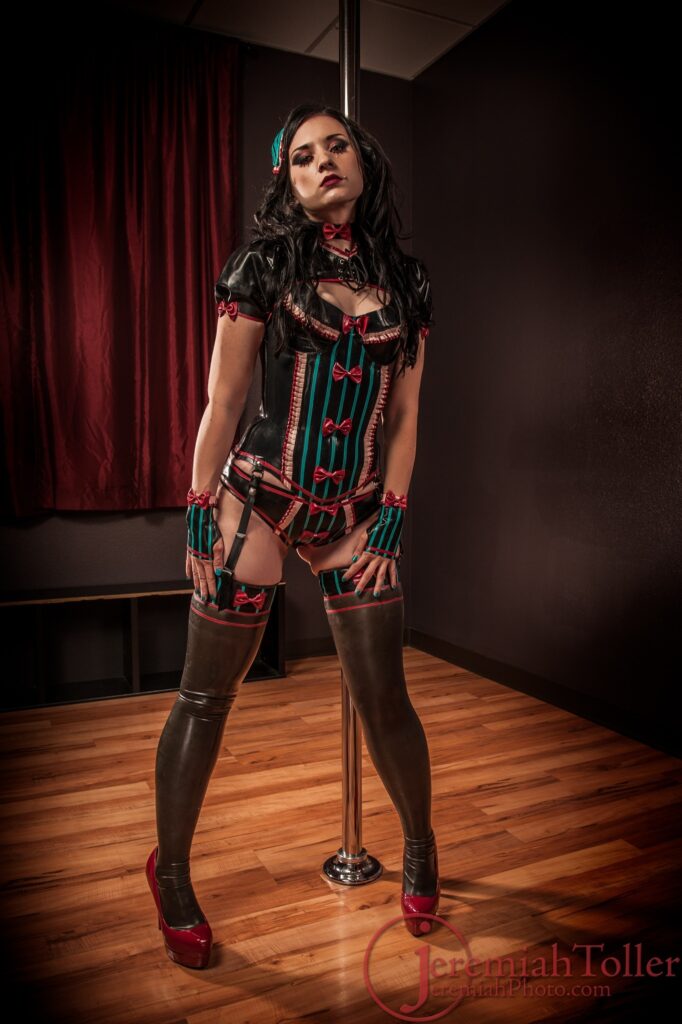
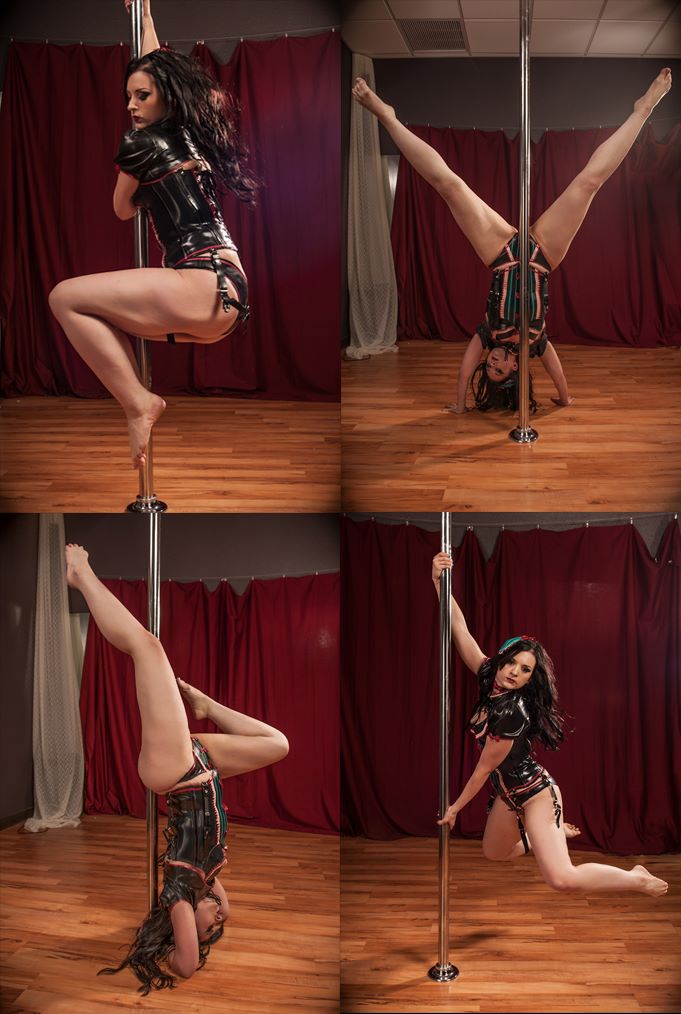
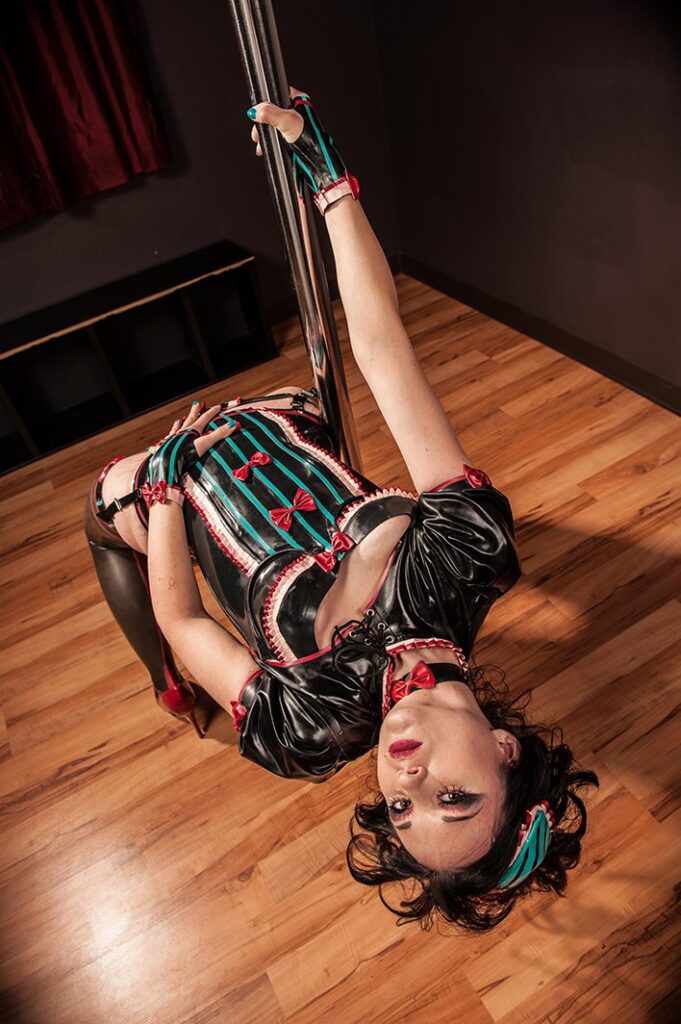
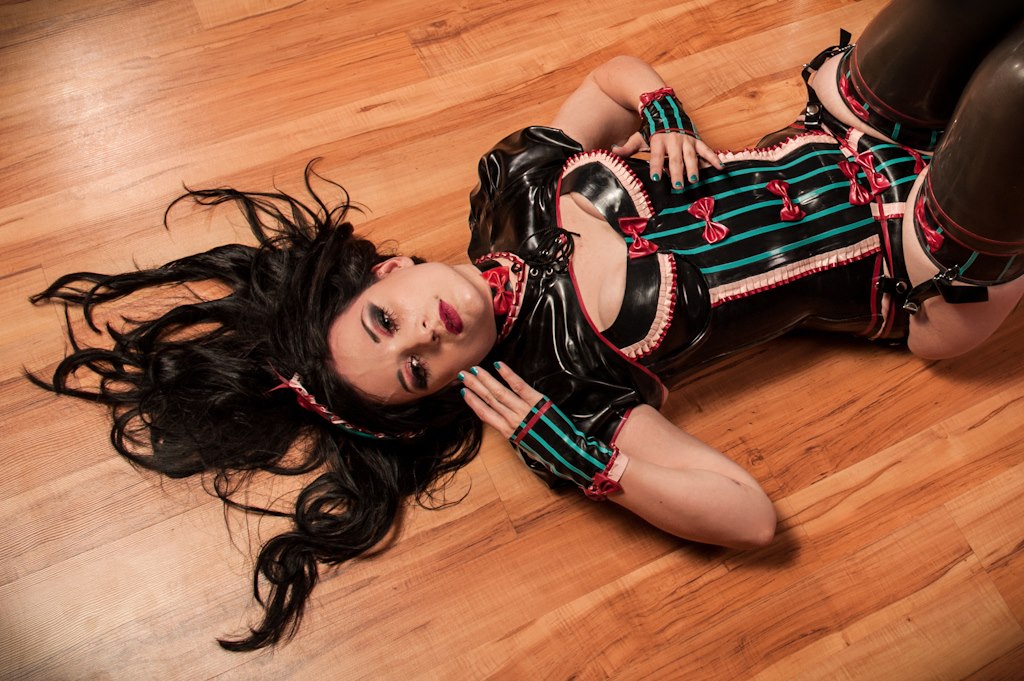
What those critics don’t understand is the deeper context:
- I had lost 145 pounds, and these performances were about reclaiming my body and celebrating what it could do. I felt like I was finally free of a costume and I could be myself unapologetically.
- It was cathartic. Dance became a way to process emotion, especially grief and healing.
- It was a continuation of an existing artistic discipline. I was already a dancer, with training in ballet, ballroom, and social dance. Pole was a natural extension of that passion, allowing me to explore a different, more acrobatic dimension of movement and expression that I could not do before.
- Pole dancing in particular made me feel strong. I never felt more like a powerful grown-ass woman and simultaneously playfully embracing my inner child than when I was training. (Fun fact: pole inversions release endorphins.)
- My intention was never to titillate. I’ve even used the slogan: “I want to be art, not fapping fodder.“
- It is a reserved space. People choose whether to follow or watch. I was not putting it on highway billboards. And I fully expect criticism for sharing myself in this article, but that is kind of the point of this piece: interrogating how we judge female expression.
- I’ve been in relationships where some or all love languages were neglected, often due to emotional abuse in an attempt to control my behavior or due to a partner’s neurodivergence (which is a spectrum with different challenges for different people), despite my healthy and available sexuality to them. Sharing dance became a healthy outlet to reclaim that emotional feedback loop on my own terms.
“My man on his willpower / Is something I don’t understand
Lyrics from “My Man on Willpower” from Carpenter’s “Man’s Best Friend” album.
He fell in love with self restraint / And now it’s getting out of hand
He used to be literally obsessed with me / I’m suddenly the least sought-after girl in the land
Oh my man on his willpower / Is something I don’t under
Something I don’t understand”
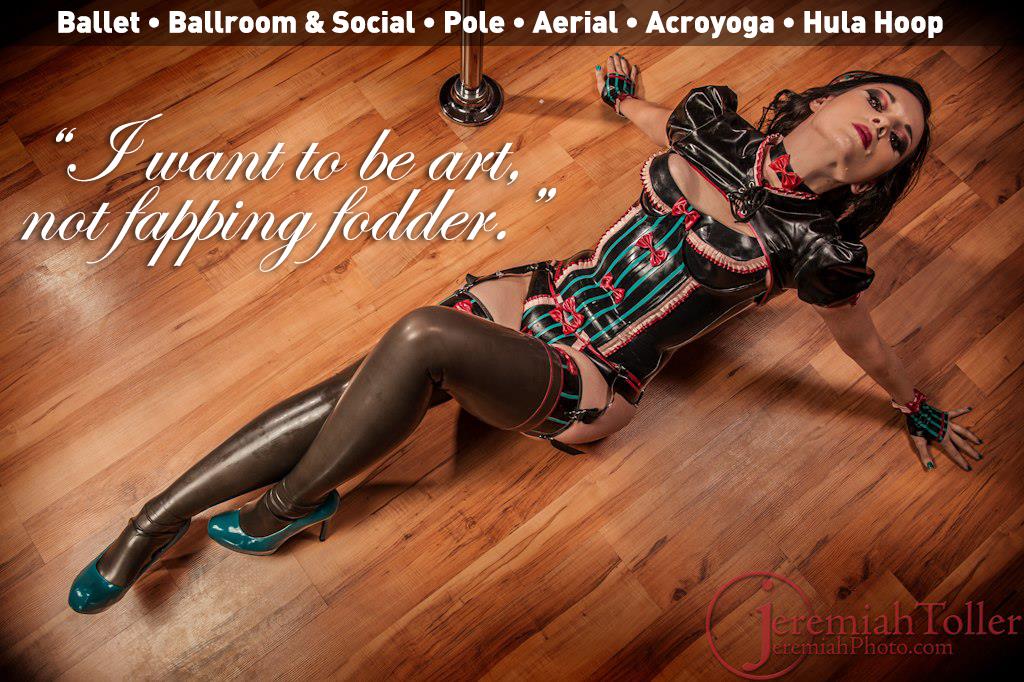
Since becoming disabled, I have been on an unwelcome hiatus from dance. Losing that outlet has been deeply difficult. It was more than expression: it was identity, therapy, strength, and joy. I can only hope that with more treatment and physical therapy, I’ll be able to return to it someday, because it is a part of my core and spirit.
So when people react to women in pop (or to me) based only on surface optics, they miss the full picture. Empowerment and expression aren’t always about who’s watching. Sometimes, it is about reclaiming something you were told not to enjoy.
They operate in dialogue with systemic issues: economics, control, performance, pleasure, and resistance. So no, I am not erasing my first reaction.
That emotional reading was valid. But I also hold the possibility that the cover is a Trojan horse: baiting the gaze, then subverting it. I am not saying it is the perfect tactic, or that I agree with every part of it. But I understand it. And I can appreciate what’s smart and strategic about it in a world where sex continues to sell, and most people won’t engage unless their attention is provoked. I also do not claim to be the arbiter of what is universally “right,” if such a thing even exists.
Sabrina’s Subversion in Context
Sabrina Carpenter’s transformation is also part of a larger pop cultural arc: the Disney-to-pop pipeline. Like Britney Spears, Christina Aguilera, Miley Cyrus, and Selena Gomez before her, she has made a deliberate pivot from clean-cut, hyper-polished teen star to a provocative pop icon who still leans into that glossy aesthetic.
While it’s not inherently wrong to evolve, this well-trodden path has uncomfortable subtext: a cultural hunger to sexualize women exactly as they transition out of girlhood. The public watches and waits, and then critiques the result… no matter how it is styled. It’s worth asking whether Sabrina is playing into that pipeline, breaking it apart, or both.
Her current persona leans into vintage-inspired, hyperfeminine glamour. She’s described Man’s Best Friend as “glossy, confident pop … served with a wink,” and fashion profiles highlight her embrace of soft pastels, sequins, and lingerie silhouettes that nod to retro “dream girl” aesthetics. This carefully styled visual identity is not accidental, it is part of the duality she appears to be playing with.
This is not the first time pop has flirted with contradiction, but Sabrina Carpenter’s is distinct in how direct it is.
Madonna
Madonna weaponized sexuality and taboo, famously blending eroticism and Catholic imagery in “Like a Virgin” and later pushing sexual provocation even further with “Like a Prayer” and the Erotica era. These performances weren’t only provocative; they forced audiences to confront how female desire and sacrilege had been framed as threats to social order. Her work redefined visibility as defiance, yet also exposed how quickly subversion could be commercialized and turned back into spectacle.
She consistently blurred the boundaries between empowerment and exploitation, often reclaiming symbols of patriarchal control and turning them into tools of authorship. However, her autonomy was frequently reframed through the same lens she sought to dismantle. Critics labeled her outrageous or attention-seeking, overlooking the fact that she had full creative control over her image. Madonna understood that control and controversy were inseparable currencies in pop culture, and she spent her career mastering both.
Peaches
Peaches built her career on radical sexual expression and gender-blurring. Her lyrics in songs like “Fuck the Pain Away” and her visuals subvert traditional power structures, using vulgarity to command rather than be commanded. (Pitchfork)
Fiona Apple
Fiona Apple, especially in Fetch the Bolt Cutters, embodies a refusal to submit to neat aesthetics or emotional expectation. The album is celebrated for rejecting curated perfection, instead foregrounding rawness, resistance, and bodily truth. Its title comes from a line in a crime show about freeing someone locked away, which is an apt metaphor for emotional, systemic, and relational confinement. Songs like “Under the Table” confront abuse, shame, and suppression, while
“Ladies” calls for women’s solidarity in fraught spaces.
Her earlier work, like “Criminal,” already cracked open the difficulty of being visible, rebellious, and wounded in the same body. It embodied vulnerability and confrontation at once. Her music videos, stripped of gloss, often placed viewers in uncomfortable intimacy. She did not hide her trauma, she worked with it. Fiona Apple’s artistic identity itself is a pushback against the notion that feminine expression should be sanitized and safe.
Carpenter, however, does not shed polish or trip into avant-garde rejection of conventional beauty standards. She keeps it glamorous enough to get attention, then (at least in this scenario) pulls the rug from under the viewer.
Spice Girls
The Spice Girls brought pop feminism to the global stage with a simple but resonant message: “Girl Power!” For many, especially those who came of age in the late ’90s, they weren’t just pop stars, they were a cultural awakening. Loud, diverse, and authentic, they stood in stark contrast to the polished passivity expected of so many female performers at the time.
They weren’t silenced by purity culture like Britney Spears, or victimized in the way she was allowed to be. They weren’t filtered through the male fantasy lens like The Pussycat Dolls, whose image leaned more toward stripper-polished perfection. Instead, the Spice Girls stormed into pop unapologetically. They laughed, yelled, wore whatever they wanted, and told girls they didn’t need to change to deserve attention.
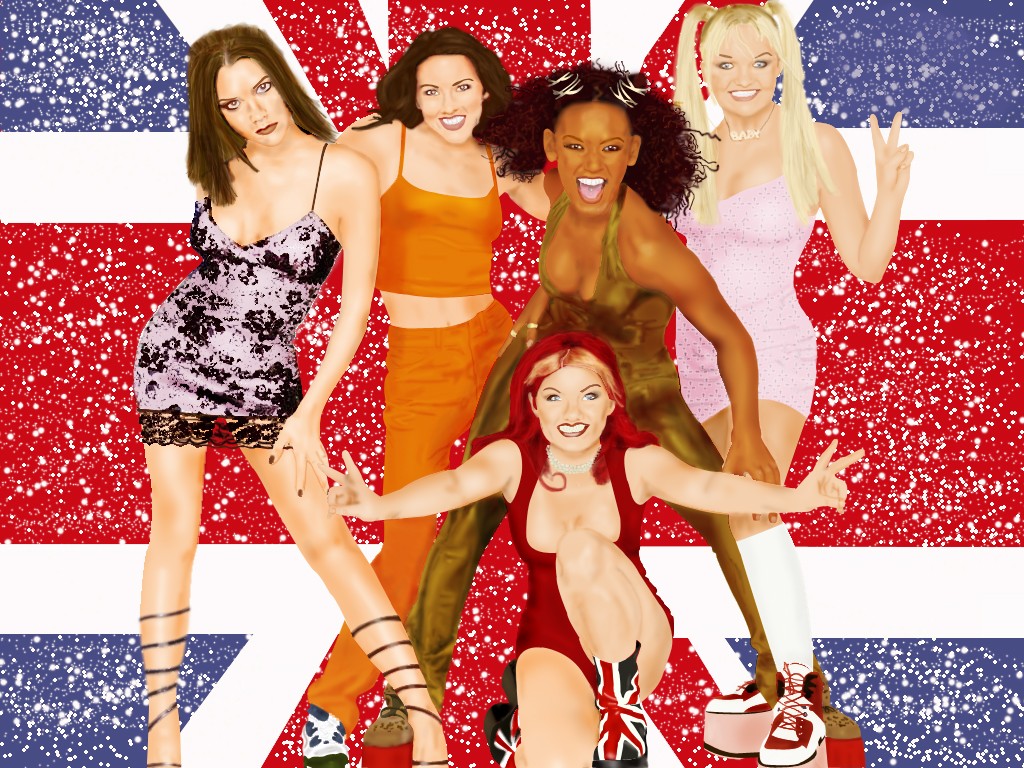
That is not to say they escaped criticism. People questioned their outfits, their influence on young girls, their commercialism, and their outspokenness. But their message was louder than the backlash, and for many, it stuck.
As a preteen, they were the pop influence that shaped me the most. Other pop stars would impact me later as a teen, but the Spice Girls came first. I’m grateful it started with them. They gave me a model of power that didn’t require pain or performance to be real.
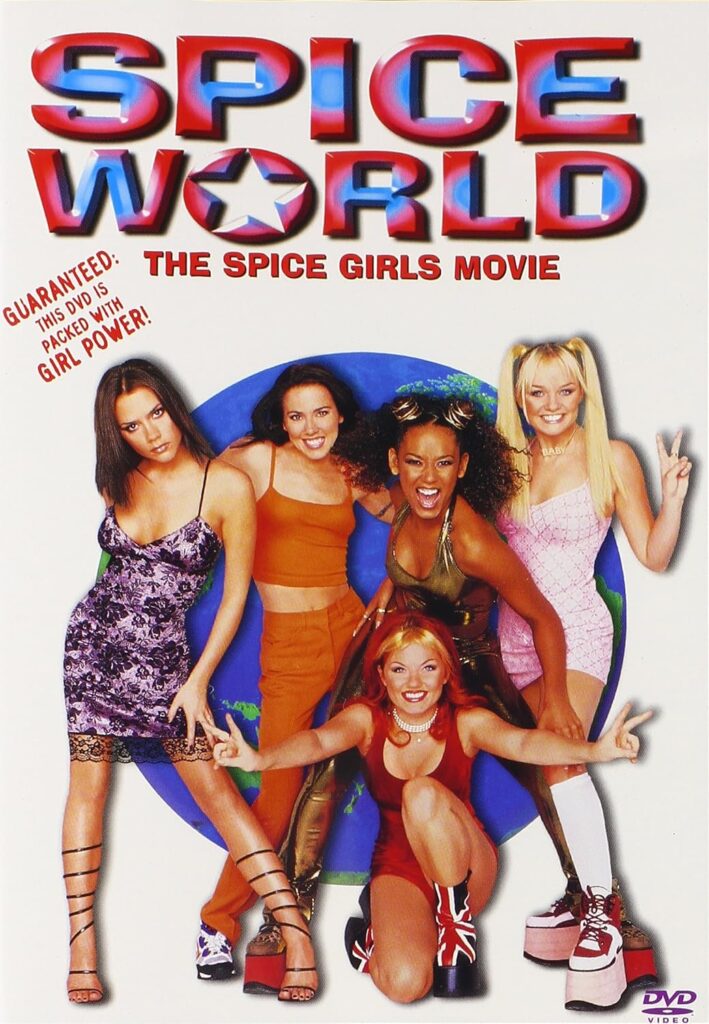
The movie Spice World comically portrayed how the tabloids hounded the girls. However, at my young age, I could not have known that the real tabloids weren’t just absurd; they were relentlessly cruel, misogynistic, and violating. Combined with the intense micromanagement and uneven standards imposed by their former manager Simon Fuller, the pressure on the group was immense and, at the time, began to erode their bond. Thankfully, with age and distance, they have healed much of that strain, or at least that is what we have been told.
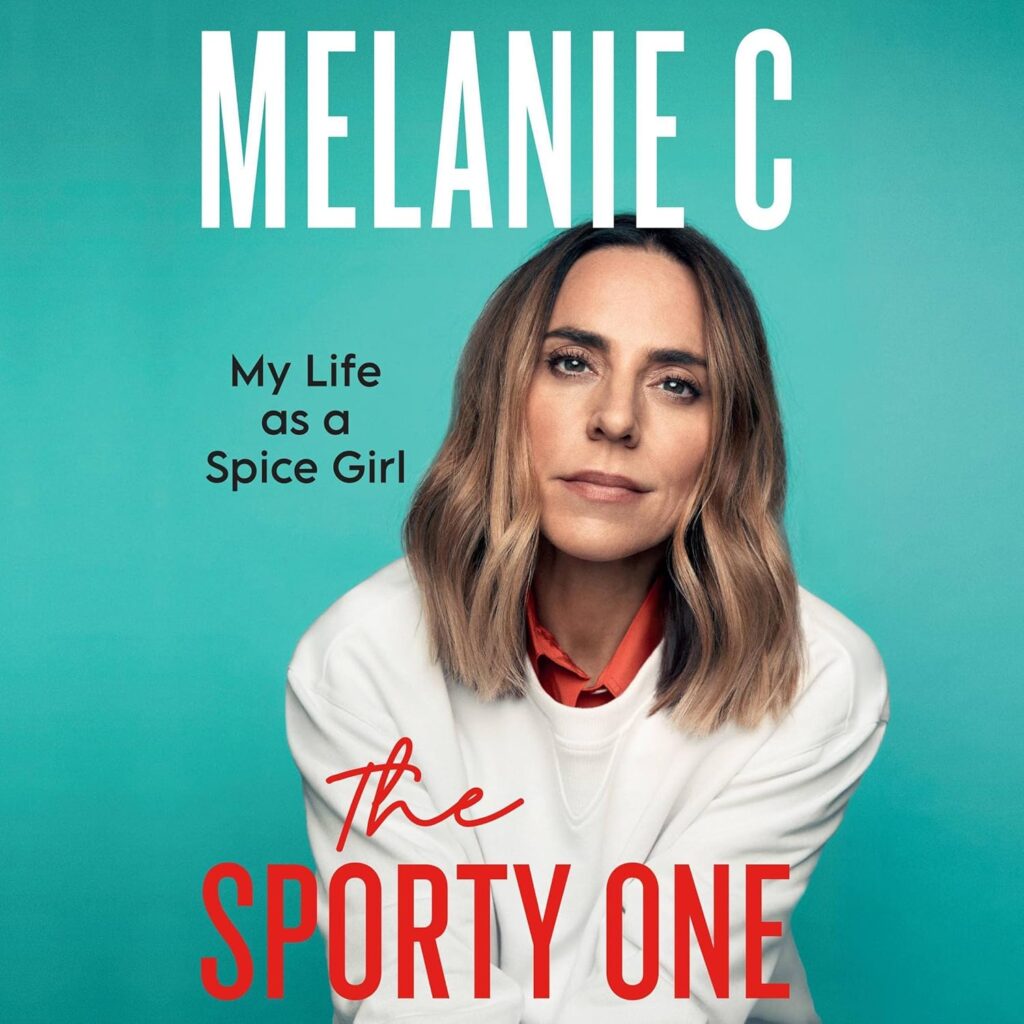
As empowering as their message was, Melanie C (Sporty Spice) later reflected in her autobiography The Sporty One: My Life as a Spice Girl (2022) that the group faced a relentless double bind: “We were slut-shamed on one hand, and called ‘frigid’ on the other.” The same press that amplified their fame also distorted their image. “I felt insecure and I had low self-esteem… The icing on the cake, the thing that really kicked me when I was down, was the press, who loved to tell me who I was: Single Spice, Plain Spice, Beefy Spice, Sumo Spice… When I think about the press, it’s such a dark shadow that hangs over me.”
Her reflections expose how even pop feminism was not immune to the Madonna–whore complex, rewarding confidence and visibility only to punish women for them. That tension haunted her deeply, leading to silence, depression, and an eating disorder. It is a reminder that the culture of empowerment they helped spark could never fully shield women from the violence of public contradiction.
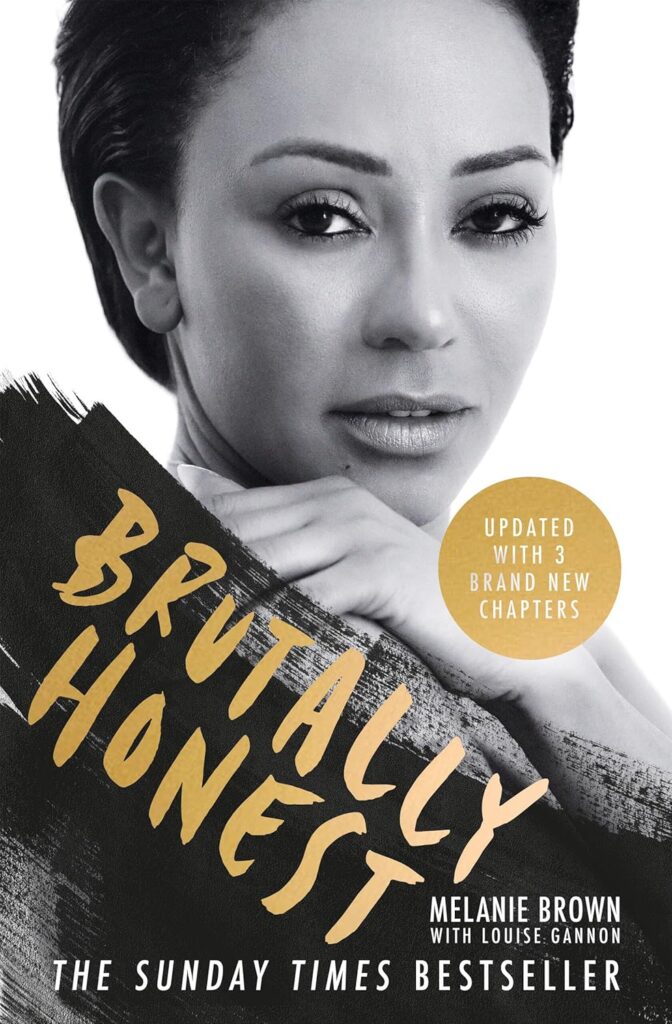
In her 2018 memoir Brutally Honest, Mel B (Scary Spice) revealed she had endured years of domestic violence and coercive control during her marriage. That revelation created a jarring contrast. The girl who shouted “Girl Power!” into stadiums had also been living with control and fear behind closed doors. It serves as a stark reminder that no message of confidence or rebellion can fully shield women from systemic harm. Feminist slogans can inspire, but they don’t always protect.
However, what makes her story especially powerful is not just that she escaped, but that she found the strength to speak out. Her decision to share her truth publicly is a reminder that empowerment isn’t about having never been harmed, it is about reclaiming your story in the aftermath. Survival, in itself, is strength.
Brandy
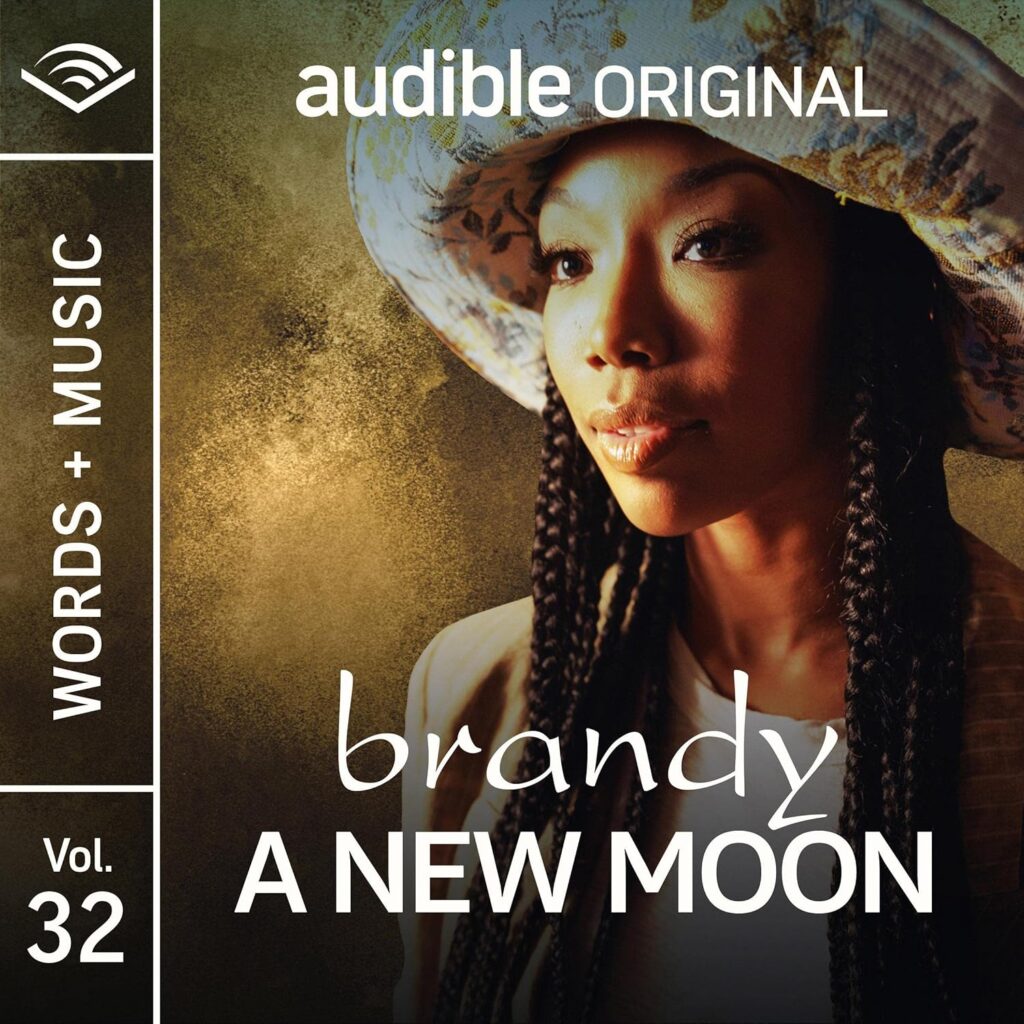
Both Melanie C and Brandy have spoken about losing themselves under the pressures of fame and expectation. In The Sporty One, Melanie C describes how years of being scrutinized and labeled by the press caused her to lose touch with who she really was, followed by burnout. Brandy reflects on a similar struggle in her Audible Original A New Moon, recalling how every choice she made at fifteen was judged. She resisted sexualization, and her mother acted as both manager and protector, yet she still felt torn between her authentic self, her role as Moesha (the television character she played), and her persona as a musician.
Miley Cyrus
Miley Cyrus has also discussed this kind of identity dissonance. On Spotify’s Rock This podcast, she said that Hannah Montana was “a character almost as often as I was myself,” and that the show’s premise implied that when she wasn’t in character, “no one cared about me.” She has described that time as an identity crisis, highlighting how early fame and constant performance can blur the line between self and persona.
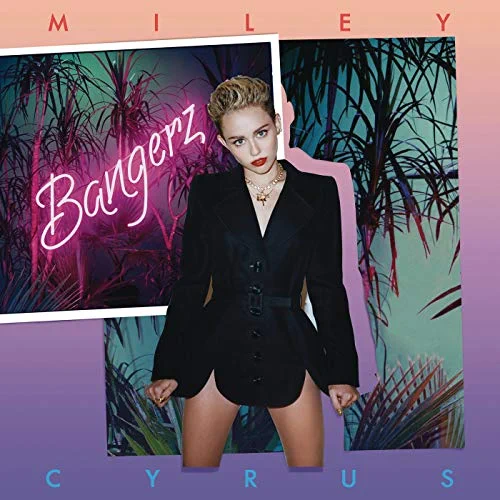
In the years that followed, Miley’s career ignited fierce debate about sexuality and agency. Her Bangerz era leaned into provocation, often interpreted as both rebellion and self-exploration after years of constraint. More recently, Miley has spoken of her eras as metamorphoses of self rather than costumes. Her newer work reflects themes of healing, vulnerability, and control, as if she’s intentionally exploring what it means to live confidently on her own terms.
Billie Eilish
Billie Eilish is another useful comparison. In her early visuals, she obscured her body, controlling what was seen, when, and how. Where Eilish initially used concealment as a form of control, Carpenter leans into hyper-visibility, positioning her body as the center of the frame.
Both strategies wrestle with the same question: How do women claim agency in an industry that profits from their objectification?
And in songs like “Your Power,” from Happier Than Ever, she confronts the dynamics of grooming and statutory abuse head-on, painting a picture of an older man who “played the part” of hero while exploiting a school-aged girl. This is a stark indictment of how men mask predation as care.
“How dare you?
And how could you?
Will you only feel bad when they find out?
If you could take it all back
Would you?”
It’s soft, but searing. It’s critical of industry norms and real-life imbalance.
Melanie C has also voiced deep respect and support for Billie Eilish. She has described giving Billie advice early in her rise and feeling proud of how her words resonated. Melanie C has also spoken about watching Billie perform and recognizing a familiar energy in the crowd, one that reminded her of the intensity of the Spice Girls’ early days. In later interviews, she has reflected on their friendship and how they connect over the shared pressures of fame and expectation. That continuity across generations of pop artists is quietly powerful, illustrating how women who have endured the industry’s contradictions often become mentors to those still learning to navigate them.
Lauren Mayberry
In her solo project, Lauren Mayberry of CHVRCHES writes lyrics that challenge male behavior directly. Her 2023 debut solo single, “Are You Awake?”, takes a more intimate, emotionally stripped-down approach, but still centers a woman’s emotional needs. And her 2024 follow-up “Change Shapes” from Vicious Creature critiques performative masculinity and toxic relational cycles, further exploring themes of control and harm that she has been outspoken about in interviews. She has also been outspoken about misogyny in music, both in and out of interviews.
Megan Thee Stallion
Megan Thee Stallion also offers a powerful template of feminist subversion. Her lyrics boldly reclaim sexual agency, as seen in tracks like “Savage” and “Body.” In “Savage,” she proclaims: “I’m a savage / Classy, bougie, ratchet / Sassy, moody, nasty.” These lyrics collapse stereotyped binaries into a self-defined identity.
Megan has also publicly addressed surviving violence and the emotional toll of being scrutinized. She balances joy, grief, sensuality, and rage in a way that resists flattening. Her work pushes beyond simple empowerment into something more expansive. It is a celebration of being multifaceted while still being targeted.
Black women in pop often face harsher criticism regardless of what they express, and Megan’s presence underscores the need for intersectionality in any conversation about feminist expression.
Christina Aguilera
Christina Aguilera, in particular, challenged this paradigm early on. Her 2002 feminist anthem “Can’t Hold Us Down,” featuring Lil’ Kim, directly criticized gendered double standards in sexuality: “The guy gets all the glory the more he can score / While the girl can do the same and yet you call her a whore.”
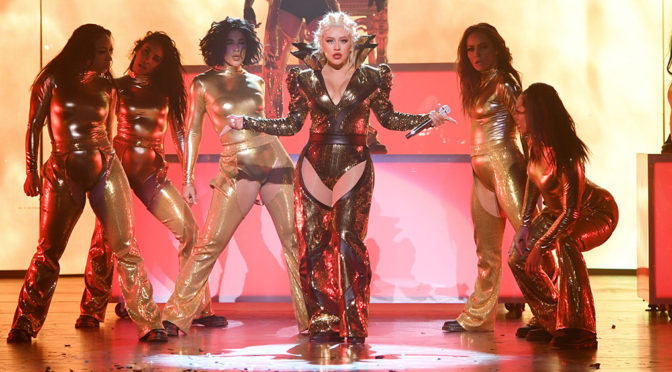
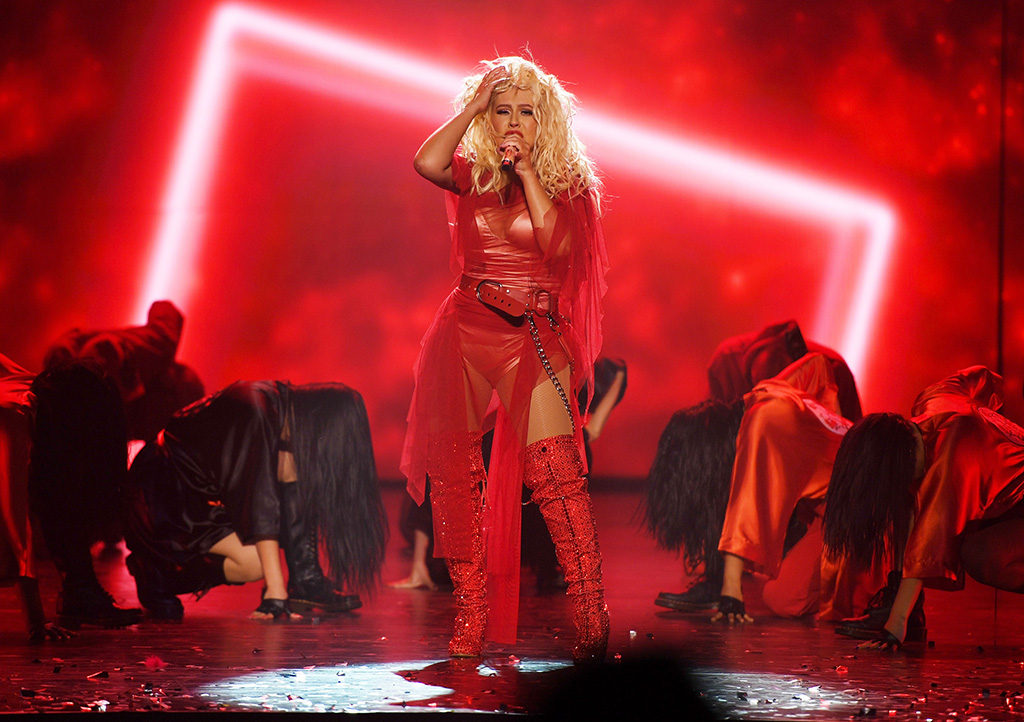
The song appears on Stripped, the same album where Aguilera shed her bubblegum pop persona for something bolder and more confrontational. In the “Dirrty” video, she wore triangle bikini tops, chaps with exposed short-shorts, and a microskirt, claiming space as both an artist and a sexual being. Aguilera didn’t just lean into sexuality, she used it to provoke, reclaim, and confront the culture that tried to control it.
She also embraces Sabrina Carpenter. In a playful Instagram video, the two appear together saying that Sabrina is Christina’s daughter. It is tongue-in-cheek, but symbolic like a passing of the torch from one subversive pop star to another.
Sabrina’s approach is not unique in its interplay of opposites. Many modern female pop artists have made deliberate contradiction part of their language, particularly those who are hyper-aware of image politics from Madonna and Lady Gaga to FKA twigs, Lana Del Rey, and, more recently, Taylor Swift, whose The Life of a Showgirl era is playing with similar tensions. What makes Sabrina distinct is not that she invites contradiction, but that she does it through a glossy, deceptively light package. She uses the language of pop fantasy to smuggle in discomfort, which is subtle enough to miss if you are not paying attention. Sabrina sits between those worlds: accessible pop and sharp critique, part of an ongoing lineage of women using contradiction as commentary.
Why This Matters, Beyond Me
These dynamics apply to anyone who has survived, or is living with, harm. Whether it is domestic violence, emotional abuse, coercion, trauma from childhood—critics often insist you must present a single, palatable narrative. If your instincts shift, you’re inconsistent, too sensitive, “overreacting.“
But trauma is not linear. Growing isn’t linear. Interpretations can evolve without making the first one “wrong.” We should want complexity, not purity tests of emotion.
The maddening part is how rapidly people reject nuance in women’s expression. They say “choose a single read or shut up” in ways rarely demanded of men. In that thread, people excoriated me for offering one reading of an image that can hit many people differently. They denied my experience. They insulted. They gaslit.
But that kind of dogpile is not about you. It is about how fragile our culture is around women having layered thoughts about sexuality, trauma, beauty, violence. It is about how much people want women to perform comfort, never discomfort.
When Beauty Becomes a Battleground: Tova Leigh’s Exposure of Verbal Violence
There is one rule that seems to hold no matter what a woman looks like: she will be criticized.
On Instagram, creator Tova Leigh frequently demonstrates this through a striking format. She shares a single image of a well-known, often conventionally attractive woman (the kind that media has told us is the best kind of woman) and then follows it with a carousel of cruel, degrading comments from men. The men’s faces appear after their words, underscoring just how shameless and ordinary this behavior has become.
In one of her videos featuring Sabrina Carpenter, Leigh highlights how even someone as young, petite, and hyperfeminine as Carpenter is not immune. Some of the vile comments are: “Be great with a bag to cover face”, “Solid 3”, and “if her ass and tits were bigger, sure”.
One image. Dozens of attacks, simply for existing while female in the public eye.
(Leigh has made these videos featuring artists that were mentioned earlier as well, such as Billie Eilish and Melanie C.)
While I primarily see misogyny come from a lot of men, I want to note many women make horrible comments about female celebrities too, and I see it when I subject myself to comment threads almost every day. It is disappointing, to say the least, and that brings things back to the internalized misogyny I mentioned earlier.
Leigh’s work lays this pattern bare. And once you see it, you can’t unsee it.
It drives home a brutal point: no matter what you do, someone will be waiting to take you down. Perfect makeup, clear skin, styled hair, a fit body, disproportionately curvy proportions, and a slew of other so-called ideals (many of which completely contradict each other). None of it protects you from the dissection. Beauty doesn’t buy immunity. Sometimes, it paints a bigger target.
Britney Spears summed it up in her 2007 track “Piece of Me”:
“I’m Mrs. ‘Lifestyles of the Rich and Famous’ (you want a piece of me?)
I’m Mrs. ‘Oh my God, that Britney’s shameless’ (you want a piece of me?)
I’m Mrs. ‘Extra! Extra! This just in’ (you want a piece of me?)
I’m Mrs. ‘She’s too big, now she’s too thin’ (you want a piece of me?)”
It is a takedown of the media machine that both builds and destroys women in the public eye. And nearly two decades later, those lines still feel timely.
Final Reflection & Invitation
Women are multidimensional. Instead of defaulting to criticism at every opportunity, we should do more asking and more listening to understand the fuller context of their choices, their art, and their self-expression. Curiosity creates space for complexity in ways that condemnation never will.
I am not walking this back. I’ll always say the image initially made me think of domestic violence (it has since grown on me a bit, while I still recognize it causes discomfort). And I can also say I believe, with some evidence, that Sabrina Carpenter may be performing subversion. Those are not mutually exclusive.
This record might mark a shift in how feminist pop is packaged: the idea that provocation and direct critique can cohabit in the same aesthetic. That’s a risky move. It may yield misinterpretations, especially in a mainstream pop landscape that often struggles to handle this level of complexity. But it also expands what pop can do.
If you are reading this and you have ever felt silenced for pointing out nuance, I see you. If you want to call something out and also enjoy it, you can. If you want to evolve your opinion, do it. Do not let culture, or the lack of emotional intelligence and unwillingness to intellectualize nuance, guilt you into sameness.
You can be critical, kind, evolving, and honest…at the same time.
To close, here’s a spoken word piece by actress and poet Caitlin O’Ryan. Her work often explores the complexities of womanhood, and this particular poem, “At What Point,” resonates deeply with some of the themes discussed throughout this piece.