
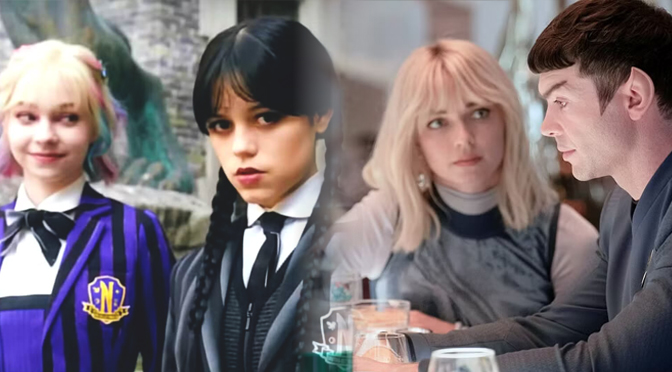
Originally published in March 2023 as The Familiar Dynamic of Two Iconic Duos from Wednesday and Star Trek: Strange New Worlds
Foreword
This long-form cultural commentary takes a closer look at how two recent series build meaning through familiar character dynamics. Rather than simply recapping storylines, it examines how “Wednesday” and “Star Trek: Strange New Worlds” use long-standing archetypes, narrative devices, and visual techniques to shape relationships.
Some character pairings feel instantly familiar—not because they are cliché, but because they reflect something we understand deeply about human connection. In “Wednesday” and “Star Trek: Strange New Worlds” (“SNW”), we see this in two modern duos: Wednesday Addams and Enid Sinclair, and Spock and Christine Chapel.
They come from different universes: one a gothic teen reimagining of “The Addams Family”, the other a classic sci-fi revival.
But both duos mirror a compelling emotional blueprint: one character is emotionally expressive, compassionate, and intuitive; the other is cerebral, reserved, and emotionally restricted.
The Archetype Across Stories
This archetype has long roots in storytelling: Holmes and Watson, Elphaba and Glinda, Frodo and Sam (or even more so—Legolas and Gimli), and yes, even Bones and Spock in the original “Star Trek.” Spock’s logic-bound restraint, in fact, often feels reminiscent of Tolkien’s elves, whose serene façades conceal emotions as fierce as their long lives. In contemporary storytelling, the dynamic often deepens into something emotionally richer, more nuanced, and more intimate.

Many refer to this as the “opposites attract” trope, though its impact goes beyond surface contrast, anchoring emotional growth and mutual transformation.
It is partly the emotional magnetism. The softer character often acts as a caretaker or emotional translator, helping the more guarded one navigate their feelings—or avoid them entirely. Enid tries to coax Wednesday out of her shell with optimism and warmth. Chapel offers Spock the emotional support he won’t ask for. There is something satisfying in watching those walls slowly, subtly come down.

But it is also about balance. These relationships are not just about caretaking—they are about mutual growth. Enid becomes more assertive; Wednesday discovers vulnerability. Enid’s long-delayed wolfing out marks the moment she claims her own power, while Chapel steps away from Spock to pursue her fellowship with Dr. Korby—a choice driven by ambition and her need for space (no pun intended). Both arcs show that growth can be sparked from within as much as from circumstance, and deepened by the person who stands beside you.
Spock’s unanticipated experience of emotion when an entity turns him fully human recalls another archetypal pairing: Nathan Wuornos in “Haven”, whose stoic numbness is broken when he discovers he can feel Audrey Parker’s touch. In both cases, the surprise of connection becomes a turning point.
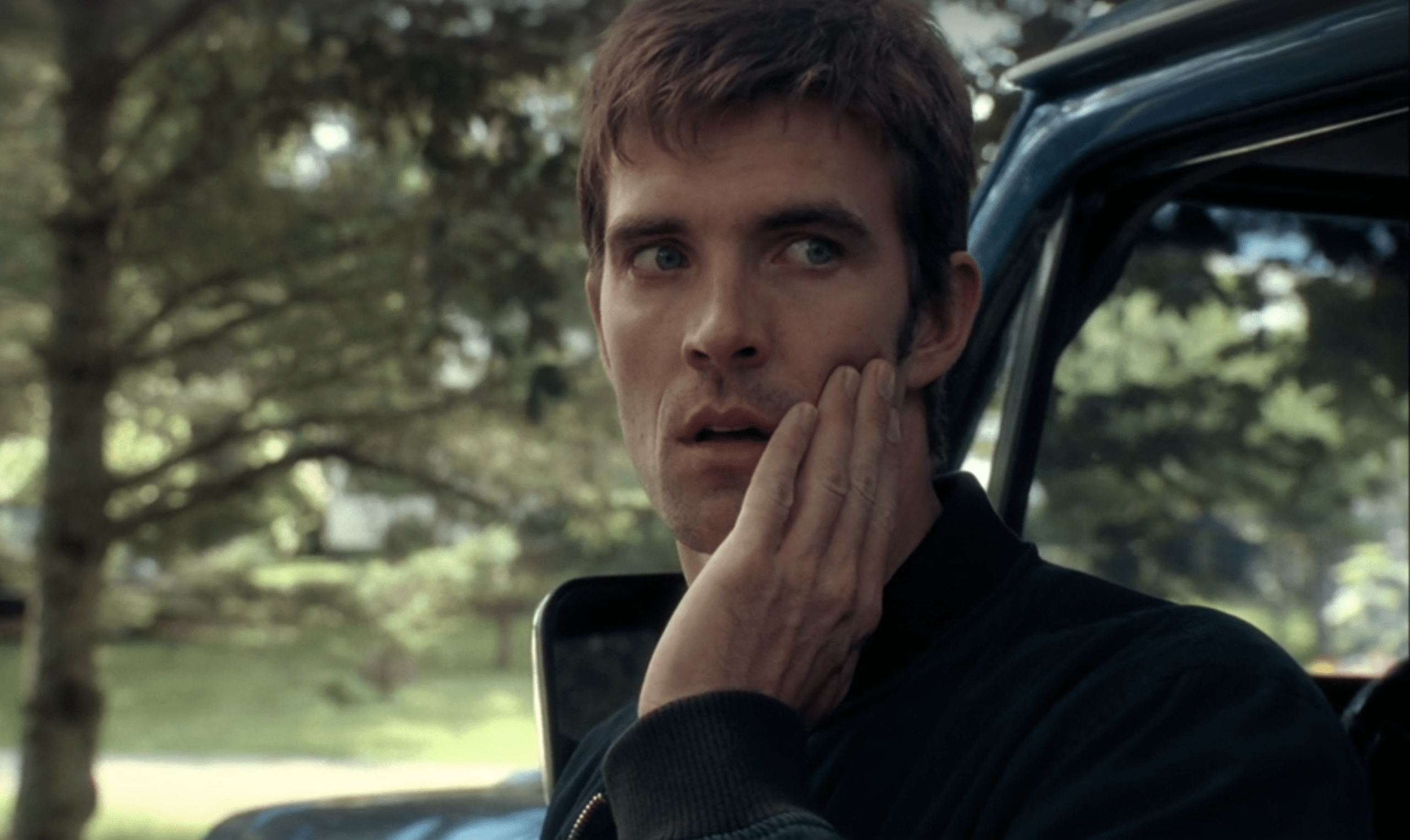
The echo of this moment across genres (paranormal drama like “Haven”, science fiction like “Strange New Worlds”) shows just how universal the stoic/soft blueprint is.
Relationship Development
Early seasons and episodes show both duos avoiding quick romantic resolutions—their emotional ties are complex, undefined, and compelling.
Yet their trajectories diverge…
Star Trek: Strange New Worlds
In SNW, Spock’s emotional shifts carry deeper context. Vulcans do not lack emotions; they feel them more intensely than humans, controlling them through mental discipline. His bond with Chapel becomes tangible, culminating in an unguarded kiss, a peak of intimacy soon shadowed by crisis and complication. Later, while lowering his defenses during the Gorn conflict and rescue of Chapel, Spock’s emotional control slips—leading to him striking the ship’s bulkhead (an interior wall) in frustration. In the aftermath, he struggles to rebuild the Vulcan discipline he depends on.
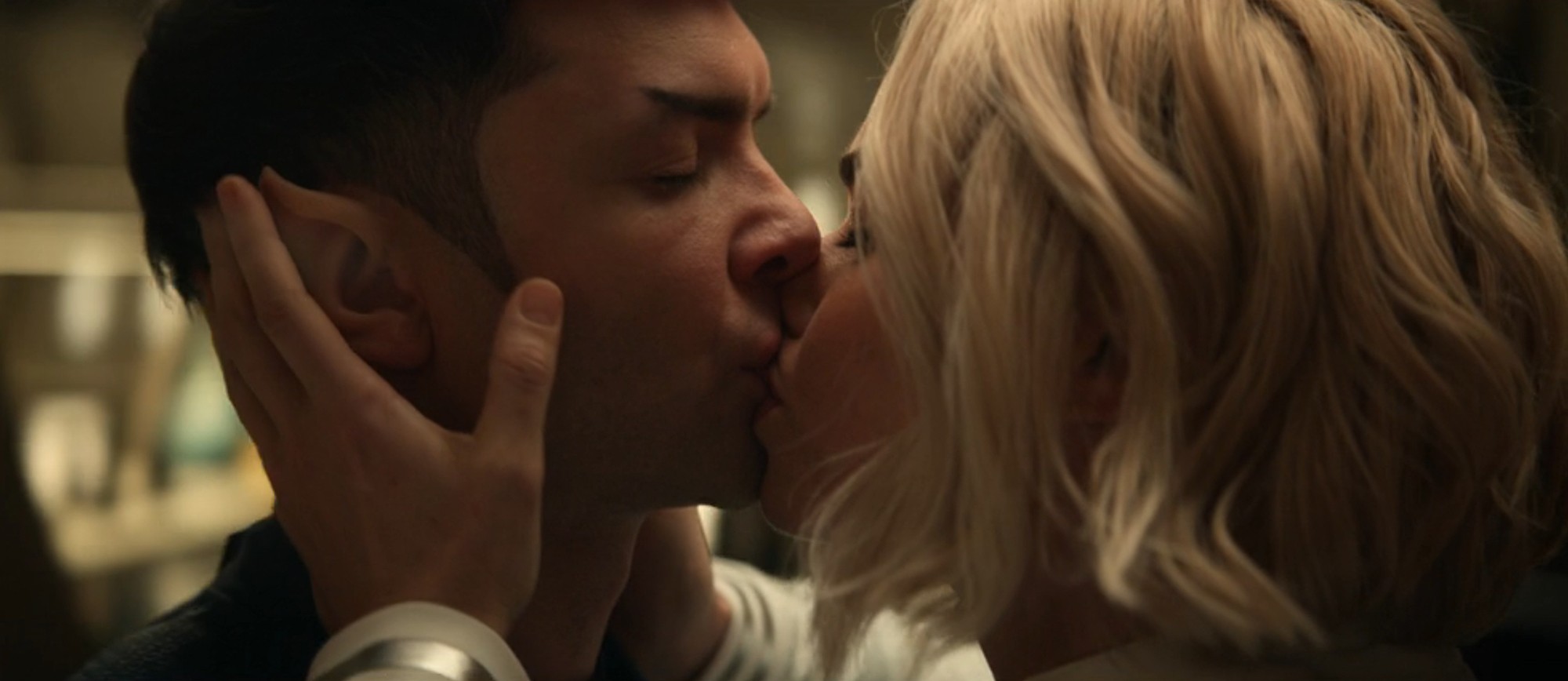
Chapel had once been a steadying presence in that turmoil, but her departure for the Korby fellowship leaves him seeking stability elsewhere—a void partly filled by his growing connection with La’an Noonien-Singh.

From the beginning, though, his bond with Chapel had carried a sense of ambiguity—part mentorship, part camaraderie, part unspoken attraction. That fluidity makes the relationship compelling, but also vulnerable to shifting forms as the story evolves.
Wednesday
In “Wednesday” Season 2, Part 1, the friendship between Enid and Wednesday is initially treated as firmly established rather than still forming. Their relationship is portrayed with more ease and comfort. The show adds hints of intensity that fuel shipping conversations, most notably when Enid says she cannot imagine a life without Wednesday, followed by another character calling Wednesday her “ride-or-die.”
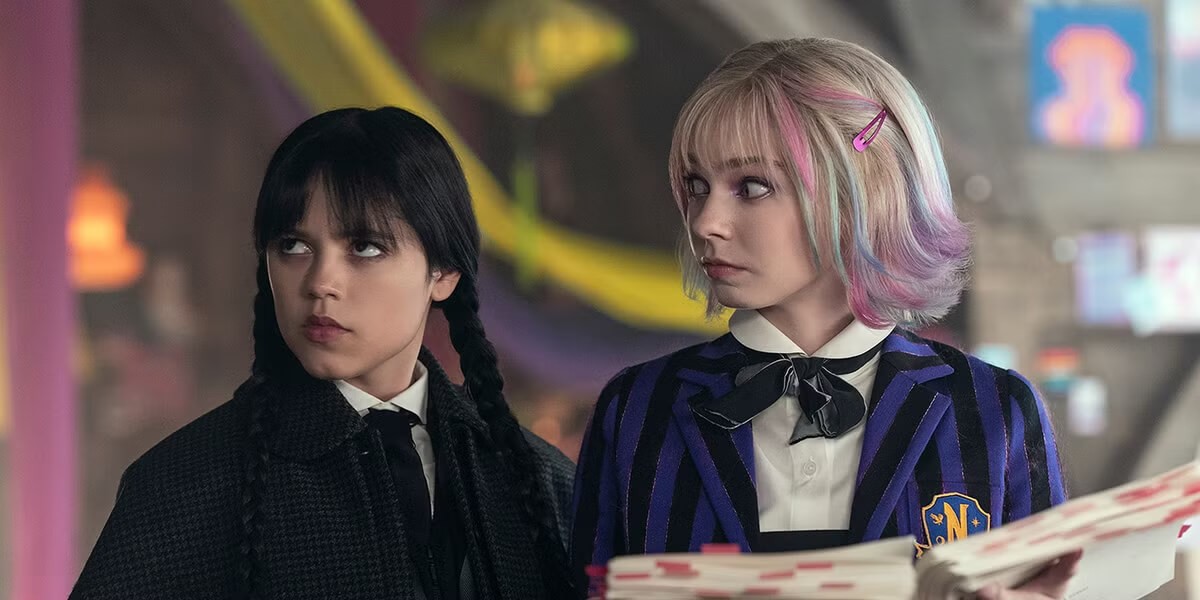
Still, despite these acknowledgments, the friendship remains fundamentally platonic at its core, with Enid’s shifting romantic subplots (from Ajax to Bruno) feeling more like placeholders than long-term commitments. Enid admits, “I’m not sure how I feel about Ajax anymore. He’s sweet and cute but… he’s still in love with the old me, and I’ve changed.” Her words underline that her arc is about transformation and self-definition—though some viewers have also speculated that this subtle line could hint at deeper shifts, perhaps even foreshadowing feelings for Wednesday. Either way, Wednesday remains the constant she orbits around.
“Machiavelli once said that friendship is watching a person’s slow drip of miseries and feeling honored to be present for their most dismal moments.” — Wednesday Addams
It is worth noting that this archetype does not require a romantic resolution to resonate. The stoic/soft pairing is powerful even in its purely platonic form. Still, in a media landscape where shipping culture drives conversation and audiences increasingly call for queer representation in popular franchises (as with Elsa in “Frozen” or Velma in “Scooby-Doo”), it is no surprise that Enid and Wednesday’s friendship is often discussed in those terms (see below). A romantic turn would be unique for the archetype, but even without it, the pairing already embodies the dynamic that makes these relationships so compelling.
Narrative Disruptions
The stoic/soft bond rarely unfolds in a vacuum. External forces test the pairing, reshaping how they are expressed and perceived. Both arcs show that even when the bond feels central, the narrative bends to challenge it from the outside.
Bruno & Romantic Distraction
In “Wednesday”, Enid’s relationship with Bruno introduces a disruption to her bond with Wednesday. The pairing shifts focus toward ordinary teenage romance, setting up sharp contrasts with the show’s higher stakes.
“The sooner I get answers, the sooner I can save Enid… who I currently want to murder.” — Wednesday Addams
When Wednesday walks in on Enid kissing Bruno, her deadpan narration underscores the absurdity of life-or-death urgency colliding with typical teen drama.

Still, Bruno never feels like a lasting fixture. His role serves more as a passing test than a true disruption to the core relationship. These moments ultimately remind us that, no matter the distraction, Wednesday’s bond with Enid is the story’s anchor. That truth becomes even clearer when deeper rifts emerge.
Agnes & Disrupting the Bond
Agnes DeMille, a red-haired student who stans over Wednesday, emerges in Season 2 as both a fixation and a foil. With the power of invisibility, she literally reveals herself during Enid’s kidnapping—a dramatic bid to capture Wednesday’s attention.

At first, she functions mainly as a plot device, even her flaming red hair serving as a symbolic red herring. Her obsession with Wednesday unsettles the core friendship by positioning herself as both ally and intrusion. Wednesday’s willingness to strategize with her, even at the cost of straining her bond with Enid, sharpens the tension.
One flashpoint comes when Enid, feeling sidelined, asks Wednesday: “Do you even want to be my friend anymore?“

Agnes doesn’t just serve as a temporary wedge between Wednesday and Enid. As the Season 2 unfolds, she gradually becomes a more transformational force. While she began by trying to replace Enid, her journey ultimately mirrors Enid’s: learning that authenticity, not imitation, is what gives her power. When Agnes stops performing for acceptance and embraces her true self, she and Enid connect over their shared growth.
This shift delivers a powerful message: genuine bonds can form even with people we once saw as rivals, if we stop fixating on securing closeness with one specific person and instead allow connections to grow organically from who we really are.
Her eventual role at the gala crystallizes this: joining Enid as her dance partner signals solidarity rather than competition, while her invisibility powers become both entertainment and a tool to aid Wednesday’s larger mission. In this way, Agnes evolves from foil and plot device into a symbol of transformation, showing how disruption can turn into kinship once characters embrace authenticity.

The very fact that it takes such extremes (along with others best left for viewers to discover) to challenge the stoic/soft duo only underscores how central the Wednesday–Enid bond remains.
T’Pring & Cultural Tradition
Spock’s engagement to T’Pring in “Strange New Worlds” underscores Vulcan duty and cultural tradition. Even when he edges toward intimacy with Chapel, that engagement brings him back toward logic and obligation. She openly engages with Spock’s internal conflict, forcing him to confront his own contradictions.
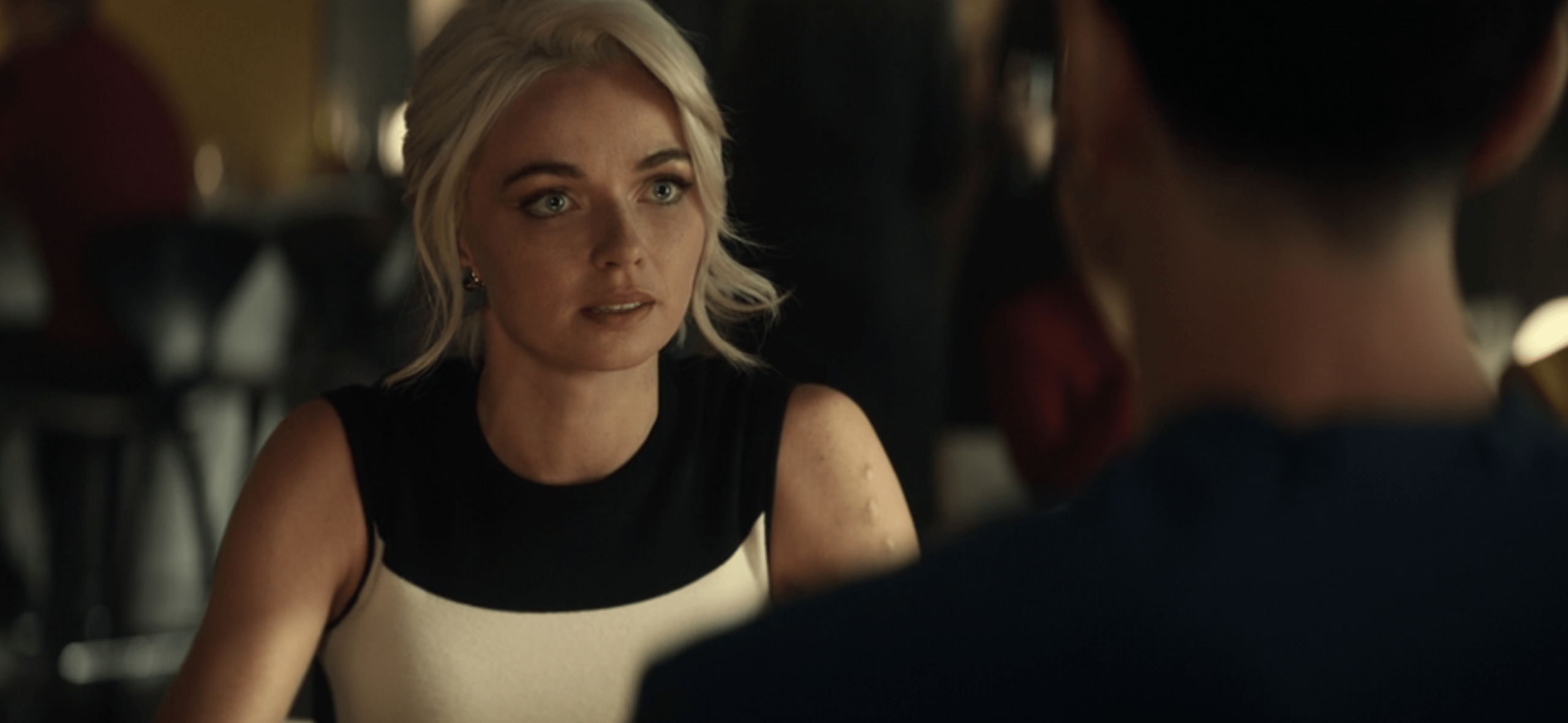
T’Pring is positioned as a stabilizing anchor, but one rooted more in expectation rather than genuine connection. Over time, though, T’Pring’s presence proves transient. Their relationship highlights the weight of cultural expectations, yet it never reshapes Spock in a lasting way.
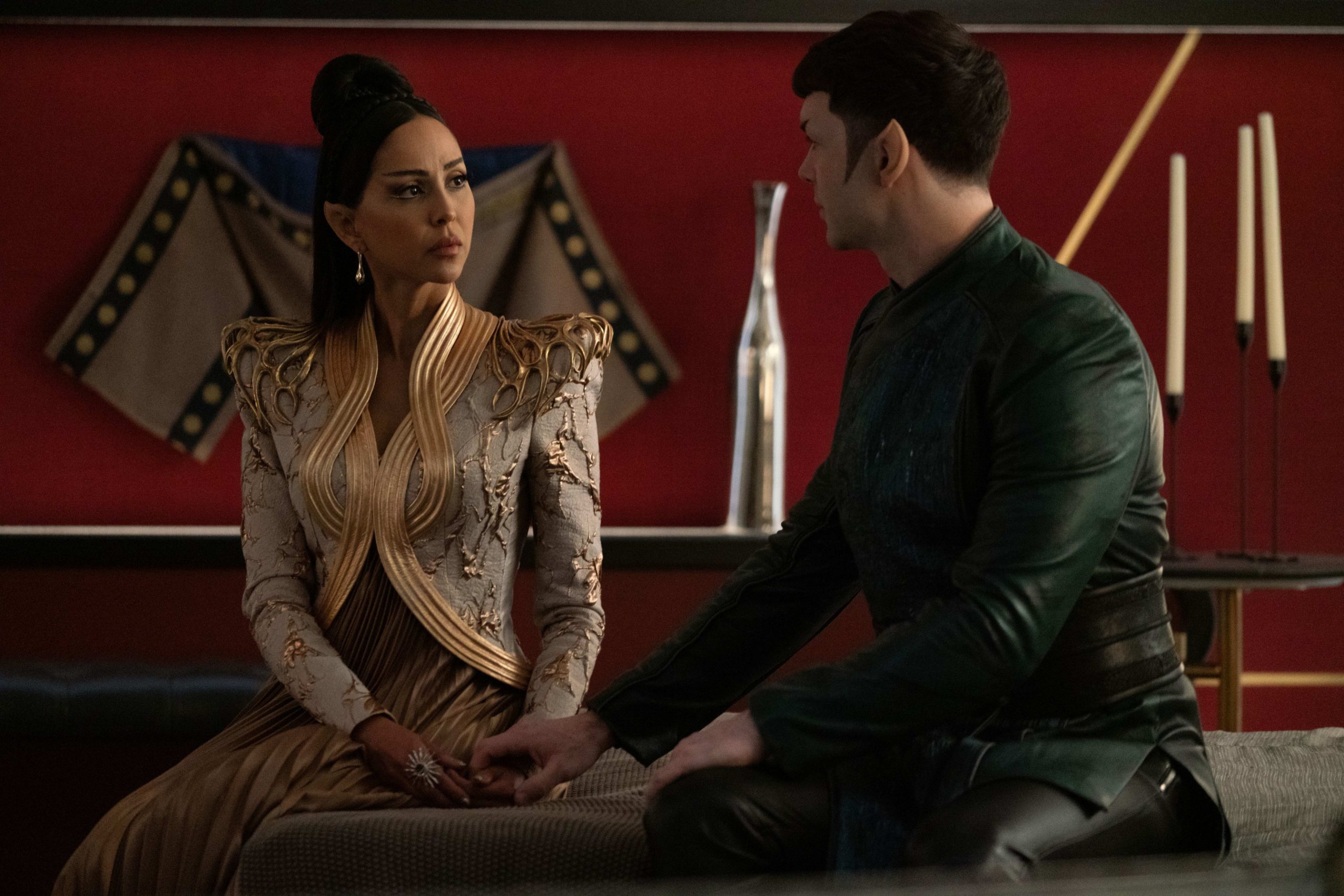
By the time of “The Original Series,” the engagement has dissolved, with T’Pring choosing another partner. In that sense, she functions less as a permanent counterweight and more as a fleeting test of Spock’s divided loyalties.
Korby & Continuity Complications
Roger Korby’s arrival in Season 3 carries more weight. Chapel’s decision to pursue both him and the fellowship realigns her arc, setting her on the path that leads into “The Original Series.”

Continuity insists Spock and Chapel’s connection cannot last; at least not in the same way. Korby does not directly transform Spock, but his presence redirects Chapel’s trajectory and, through her absence, alters Spock’s circumstances. (Even the strange reality-bending “wedding” incident only underscored how precarious their bond is when pitted against long-established canon.)
Chapel’s choice to pursue her fellowship and a relationship with Korby splinters the connection she once shared with Spock. And while their connection had been undeniable, the series makes clear that it is not unbreakable. Heartbreak is acknowledged, but the story does not linger on it. I hesitate to call Spock’s bond with La’an Noonien-Singh a rebound, but as Season 3 unfolds, the timing gives it that resonance. At the same time, it conveys maturity: the ability to honor what existed with Chapel yet move forward without dwelling. For Spock, Vulcan emotional discipline surely helps—but so does the simple fact of finding someone new.

The rupture of their relationship pushes Spock to confront impermanence and reassert the Vulcan discipline he had let slip. His growth comes not from Korby himself, but from losing the connection Chapel represented: a space where his vulnerability felt possible.
This was not the first time Spock experienced the severance of an emotional connection when tapping into his human side. As seen in “Star Trek: Discovery”, he was rejected by his sister Michael Burnham when they were still children. That kind of loss left a mark, and it’s easy to imagine that his course-correction back to a logic-dominant state feels familiar—a coping mechanism first forged in youth.
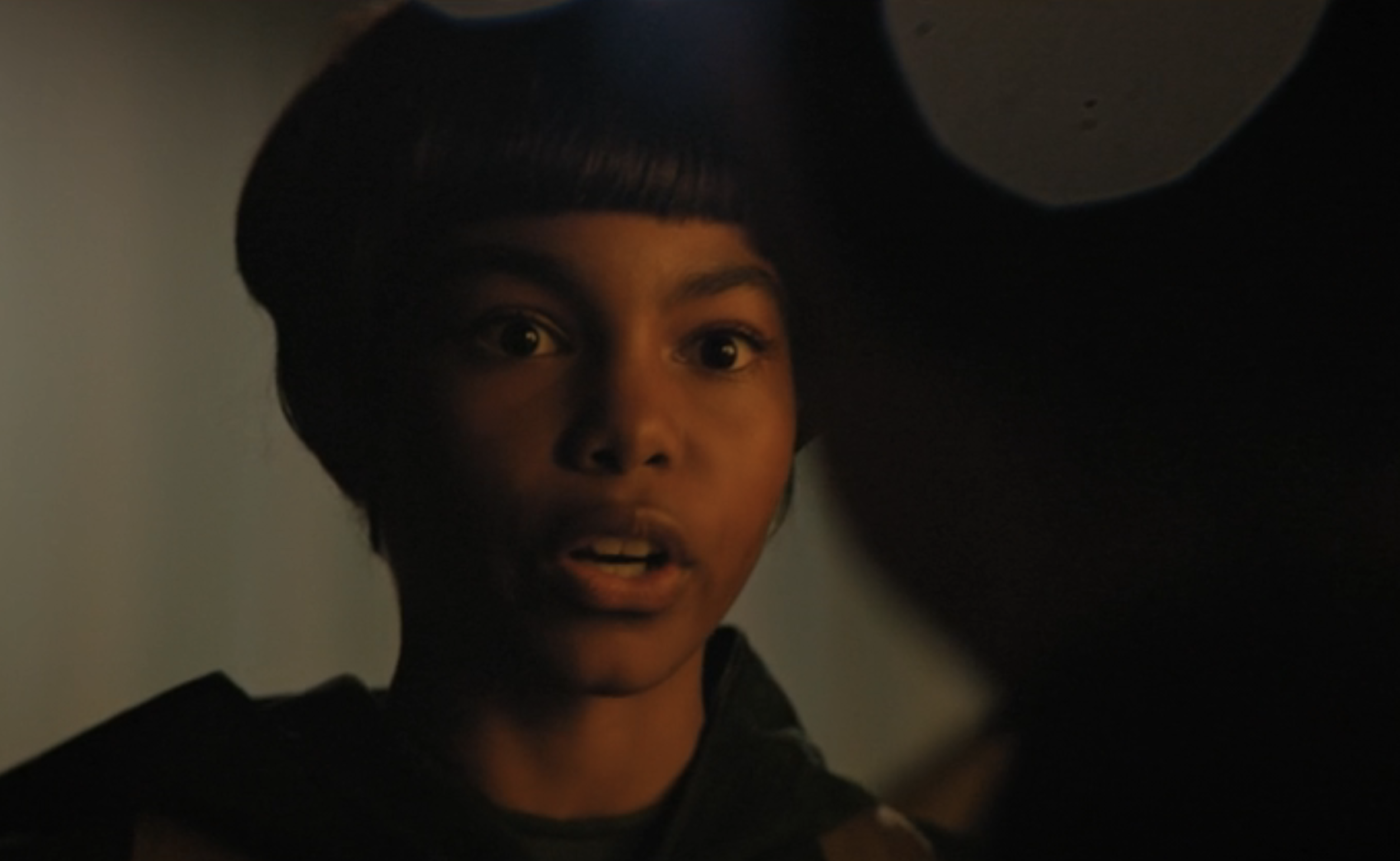
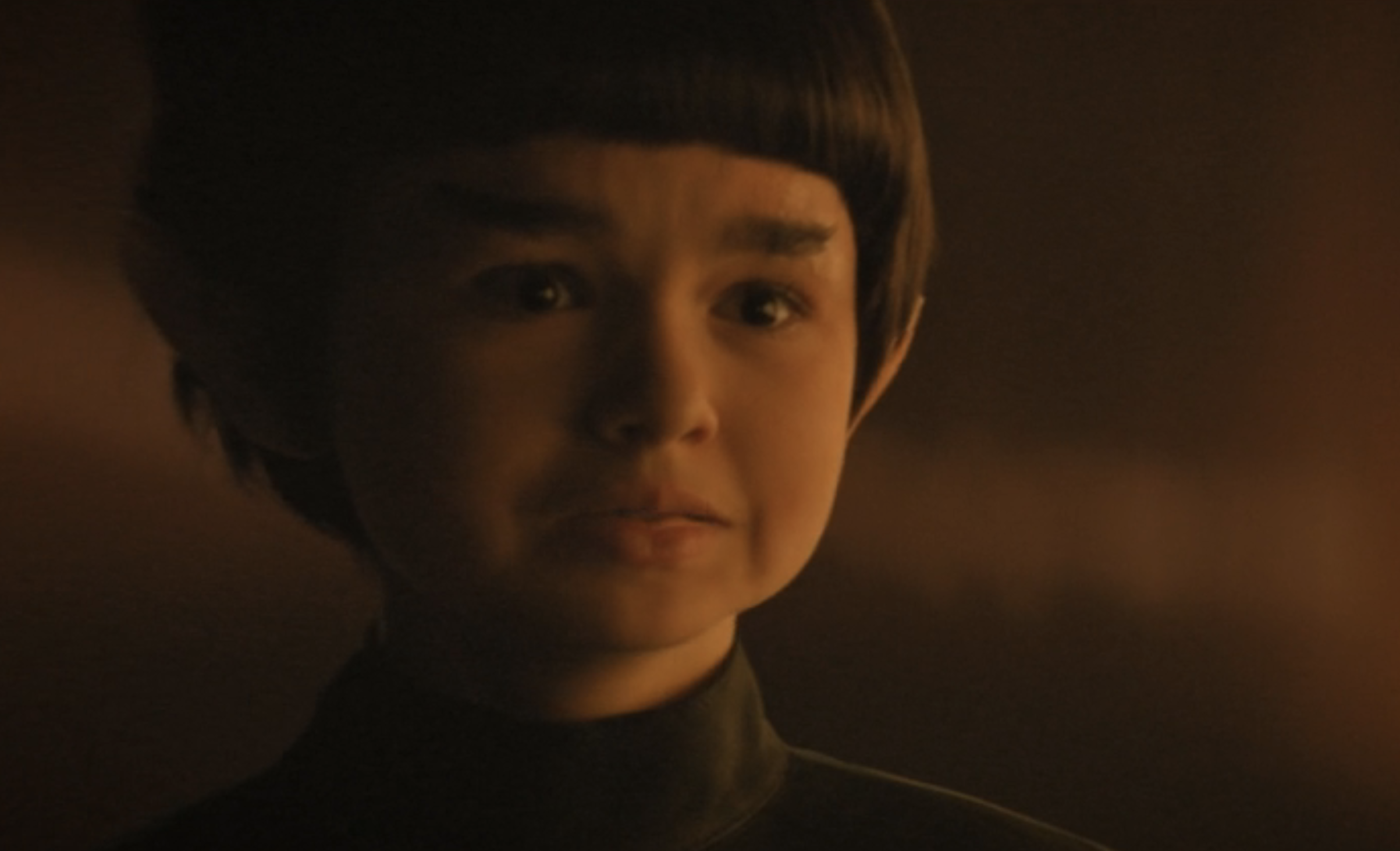
“Discovery” also reveals the turbulence of his upbringing as a Vulcan seen as “different,” compounded by a diagnosis of L’tak Terai (the Vulcan equivalent of dyslexia) often dismissed as human weakness rather than met with support. For casual fans who had only known Spock as the incredibly intelligent and composed officer of “The Original Series”, it offers a surprising reframing of just how hard-won that control always was.
In the aftermath of Chapel’s departure (and Korby’s arrival as of early Season 3), she and Spock begin to settle into a different kind of relationship—one with the potential for genuine friendship rather than romance. Their ability to work alongside each other without overt awkward tension, even with Korby present, suggests that perhaps friendship is the dynamic in which they are truly compatible.
These challenges—whether fleeting romances, obsessive admirers, cultural pressures, or continuity itself—do not diminish the stoic/soft archetype.
If anything, they prove its lasting appeal: even when the relationship moves out of focus, it leaves a deep emotional imprint that continues to shape the characters and the story.
In contrast to “Wednesday,” where the friendship between Enid and Wednesday remains the fixed center despite every disruption, “Strange New Worlds” emphasizes fragility: attraction can be powerful, yet still impermanent. For Wednesday and Enid, that magnetism keeps pulling them back together. For Spock and Chapel, the attraction is just as undeniable, but it is fragile, bounded by duty and canon. Their story underlines that sometimes, no matter how powerful the love or how magnetic the opposites, a connection simply cannot endure.
In “Wednesday,” Bruno proves fleeting while Agnes grows into a transformative ally. In “Star Trek: Strange New Worlds,” the pattern flips. T’Pring ultimately becomes a transient figure; her engagement with Spock canonically dissolves in “The Original Series.” Korby represents the lasting disruption, but his role is more about redirecting Chapel’s path than shaping Spock’s directly. It is Chapel’s decision to pursue Korby and her fellowship, combined with the rupture in her bond with Spock, that forces him to confront impermanence and rebuild his discipline. This inversion shows that the stoic/soft dynamic endures whether the wedge is temporary or permanent. What matters is the transformation it sparks in the characters.
The Chapel–Spock relationship does not stay at the forefront in the series. That shift feels intentional, reflecting its narrative trajectory, and it also appeals to viewers who favor the show’s more science-fictional focus. Some fans, in fact, have welcomed the change after voicing fatigue with Chapel–Spock storylines.
The focus on a persisting bond in “Wednesday” reflects the show’s target demographic. It is primarily aimed at young adults, especially older teens and people in their twenties. Its coming-of-age themes, high school setting, and exploration of identity, friendship, and romance are all classic YA territory. However, the show also intentionally appeals to a broader audience.
Balancing Weight with Levity
Both shows balance drama with comic relief, but in different registers. In “Wednesday,” drama is leavened by the eponymous character’s deadpan wit and the signature absurd antics of the Addams family, preventing the story from collapsing under its own intensity.
A particularly memorable twist arrives in Season 2, Episode 6, when Enid and Wednesday unexpectedly swap bodies—the result of a séance gone awry involving the ghost of Professor Rotwood (played by Lady Gaga). The scene explodes into comic gold as Enid, now in Wednesday’s body, bursts into the Nevermore courtyard wearing a color-drenched pink-and-purple sweater and dances enthusiastically to BLACKPINK’s “BOOMBAYAH.” The moment is hilariously off-brand—not just because of the uncharacteristic behavior, but because viewers know that Wednesday is allergic to color, a fact that makes the scene’s closing beat (a full-body rash and flailing meltdown) even funnier.


All the while, Wednesday (trapped in Enid’s body) seethes as she watches. The humor works on multiple levels: it’s slapstick, but it also sharpens the contrast between their personalities, joyfully exaggerated through the body-swap conceit. It reinforces how different they are, and just how much they have come to affect one another.
Funny enough, in the “Strange New Worlds” Season 1 episode “Spock Amok,” Spock and his fiancée, T’Pring, also accidentally swap bodies during a Vulcan ritual intended to share their khatras – a Vulcan soul-sharing.
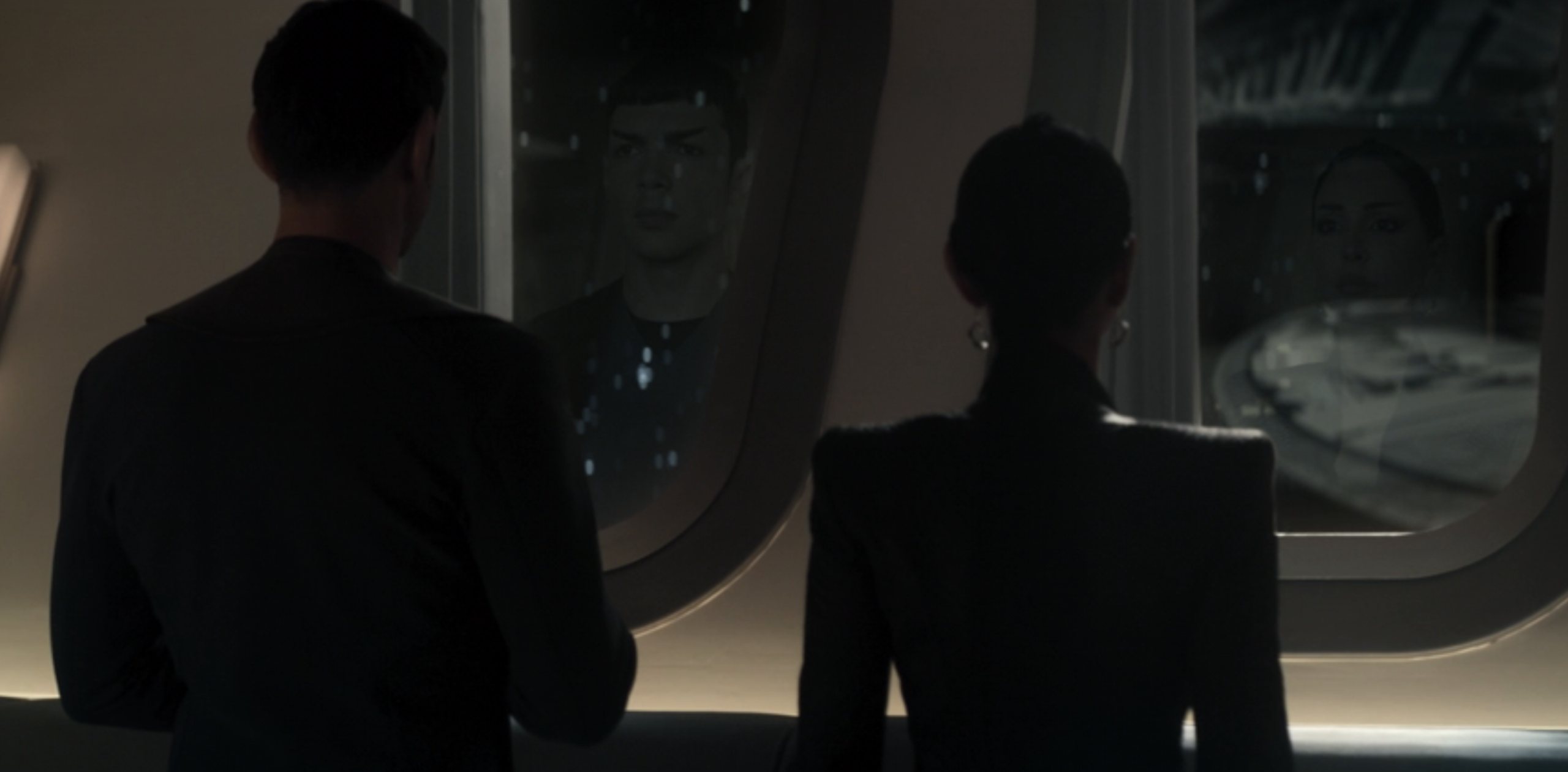
And for those who do not connect with the emotional thread in “Strange New Worlds”, there are countless other layers to savor: the comedy, the fantasy, the social commentary, the politics, the danger, the surprises, the mysteries… and yes, even the musical episodes?! (That’s right—”Strange New Worlds” Season 2, Episode 9 is a full-on musical. No doubt a polarizing choice for the fanbase, but I write this with real amusement. Personally, I am a huge sap for musicals and the heightened emotion they convey, so this episode draws me in most of all.)

Like its pioneering predecessor “The Original Series,” “Strange New Worlds” embraces tonal range—sometimes even in consecutive episodes. In Season 2, a lighthearted crossover with the animated “Star Trek: Lower Decks” characters is immediately followed by the grim wartime drama “Under the Cloak of War,” a sharp tonal swing that underscores the series’ flexibility. While many series use tonal variation, Trek arguably set the standard, and its rhythm went on to influence later genre shows like “Firefly,” which borrowed its blend of found-family dynamics, moral dilemmas, and humor amid the void of space.
Just as tone shapes our emotional response, the camera shapes our perspective; it frames contrast, alignment, and emotional distance in ways that make connection feel visual as well as narrative.
Visual Parallels in Aesthetic & Cinematography
The tests these duos face are not just written into dialogue or plot twists, they are embedded in how the camera frames them. Costume design, tonal juxtaposition, staging, and cinematography all amplify the push-and-pull of stoic and soft.
At times, the lens reinforces their archetypal differences: Enid’s pastel brightness against Wednesday’s gothic black, Chapel’s crisp blonde styling and pale uniform softening her presence beside Spock’s structured, dark palette. (Visually, Chapel even echoes Enid, as though the archetype itself has aged into another universe.)
At others, it highlights the very disruptions that threaten those bonds: whether through lens focal shifts or deliberate staging that places new characters between them. In both shows, the visual grammar makes their contrasts (and their fragility) impossible to miss.
The resonance between these duos becomes even clearer upon a closer look at the cinematography. Both shows use strikingly similar, yet common visual grammar to highlight the relationships:
Face-to-face Staging
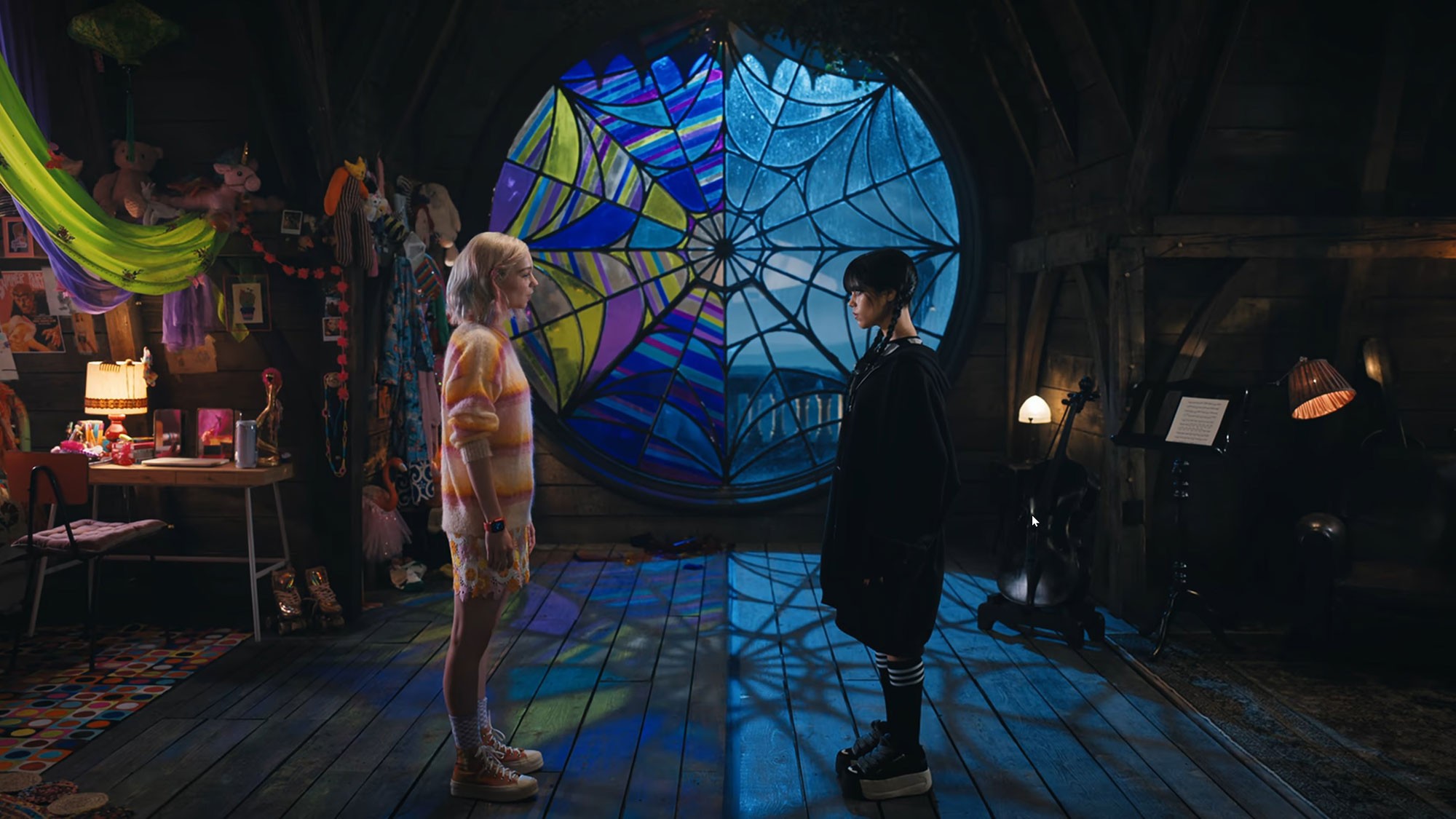
Enid and Wednesday are often staged in profile against bold backdrops—most iconically the spiderweb window, itself split into two styles to mirror the divided room. The framing sharpens their opposition while preserving their symmetry.

By contrast, Chapel and Spock’s direct eye contact draws the focus to likeness as much as difference, turning the same visual device into a conduit for intimacy when Spock’s humanity makes him most open to her.
The Two-Shot & Side-by-side Framing
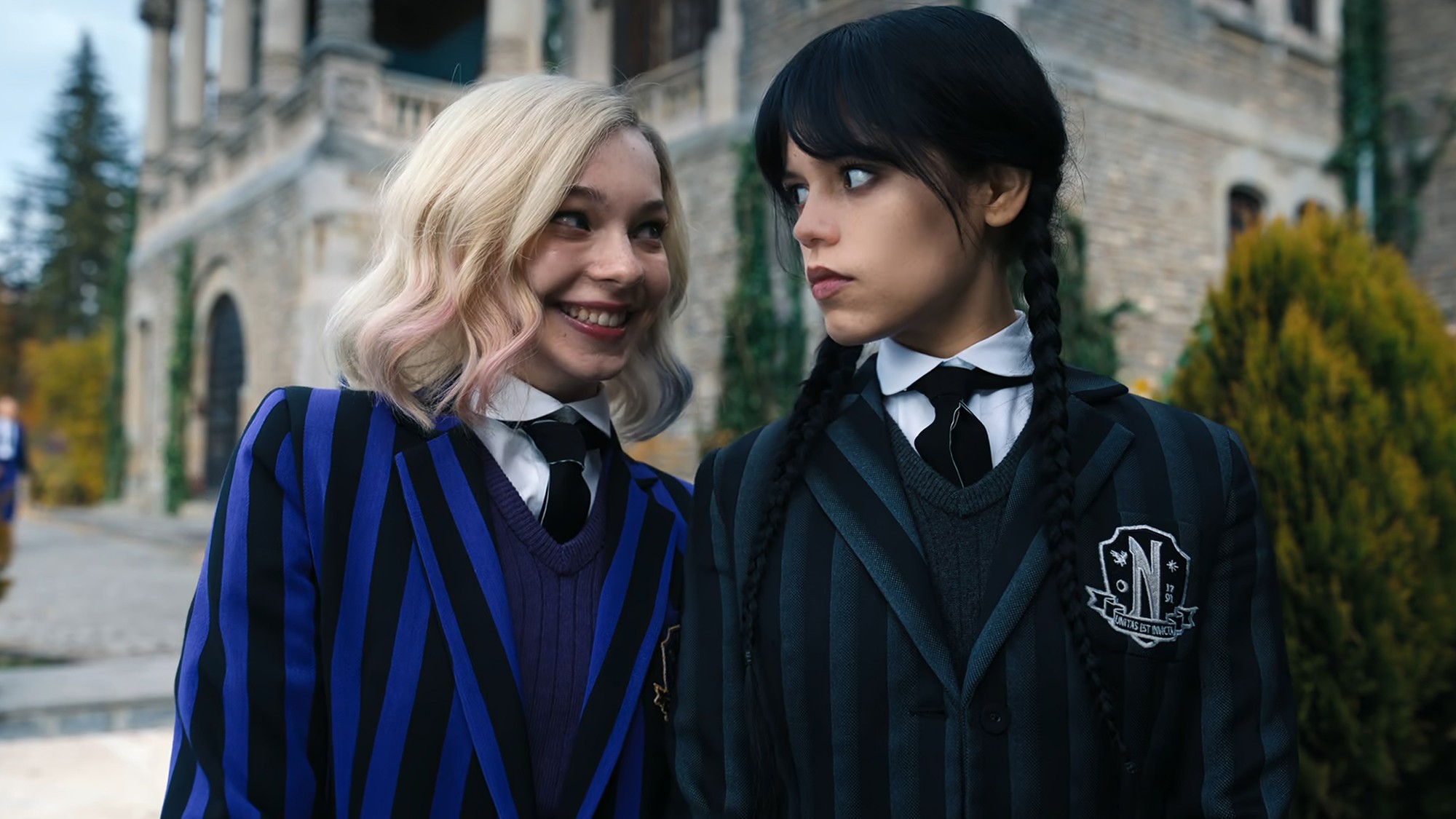
In many of these scenes, the characters are filmed in a two-shot (composition where both are shown together in the frame) reinforcing their bond or contrast through shared space and body language.
Some compositions place the pairs shoulder-to-shoulder. Enid beams toward Wednesday while she stares intensely, and Chapel gazes at Spock, who returns her look with a trace of warmth tempered by restraint. The body language underlines the imbalance: warmth is offered, but stoicism holds the center.

Depth-of-field Emphasis
Shallow focus is a standard cinematic tool for dialogue, but in both shows there are moments where it aligns with their character dynamics. In “Wednesday”, certain shots hold Wednesday in sharp focus while softening Enid in the foreground/background, subtly reinforcing the imbalance of perspective.

In Season 2, one sequence sharpens the dynamic by first centering Bruno in focus as he urges Enid to speak up, then shifting the lens to her worried gaze at Wednesday and Agnes across the schoolyard. The focus handoff mirrors the tug-of-war in their friendship: Bruno draws her toward vulnerability, while Agnes draws Wednesday deeper into scheming. The irony is that all this plotting is ultimately in service of saving Enid herself. Even when outside forces tug them apart, the story keeps circling back to her as the heart of the bond.

In “Strange New Worlds”, similar choices keep Spock crisp while Chapel is blurred. These examples highlight how even technical devices can echo the archetype’s contrast. By Season 3, however, the balance begins to shift: certain scenes bring Chapel into focus while Spock recedes, granting her greater narrative weight and forcing him to grapple with the distance.
Visual Techniques Across Contexts
These selected shots, including both the central duos and supporting characters, show how cinematography techniques can express a wide range of emotional dynamics. The same type of shot can emphasize closeness, or distance, or tension, or even conflict, depending on how it is used.


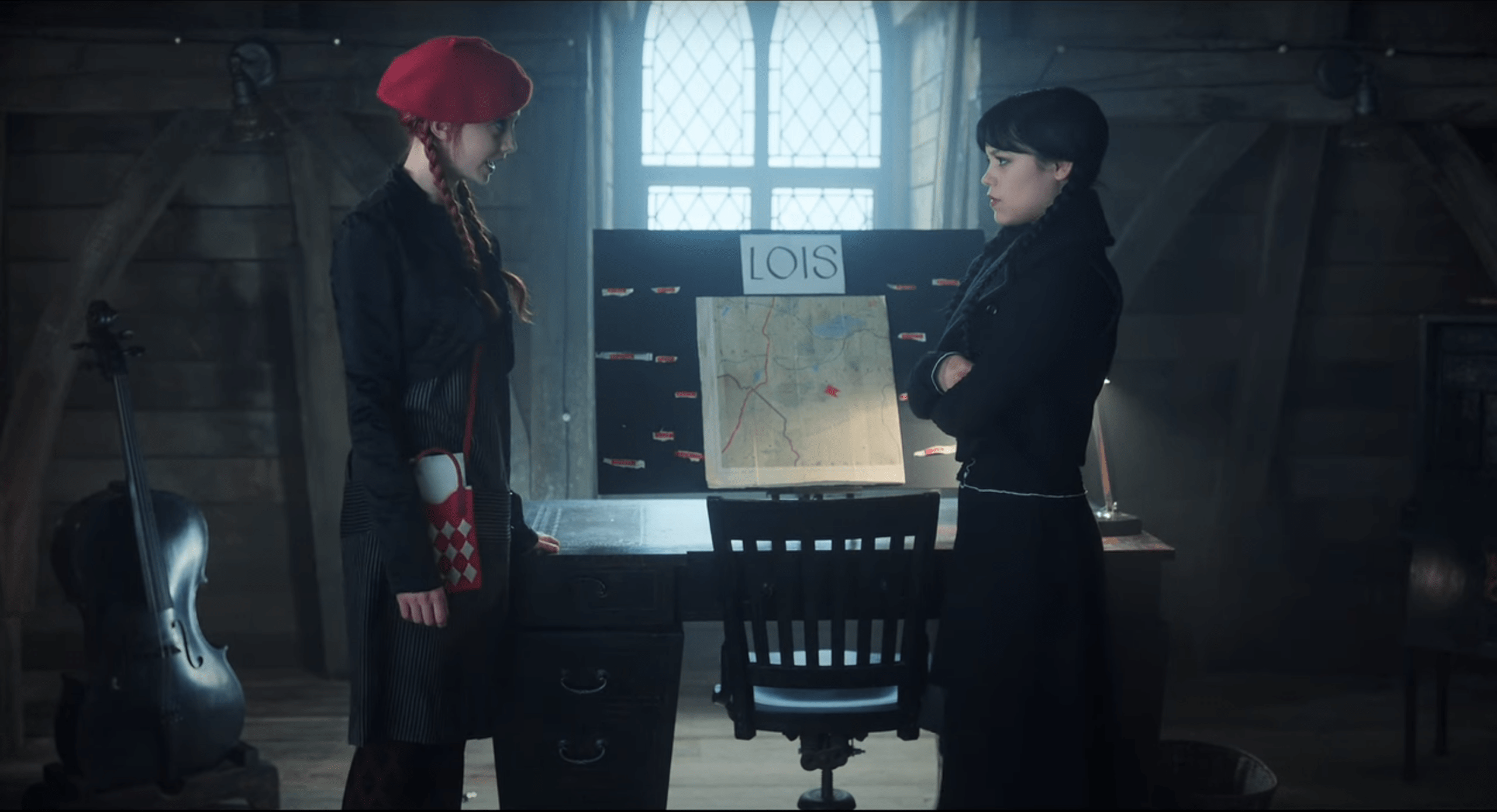


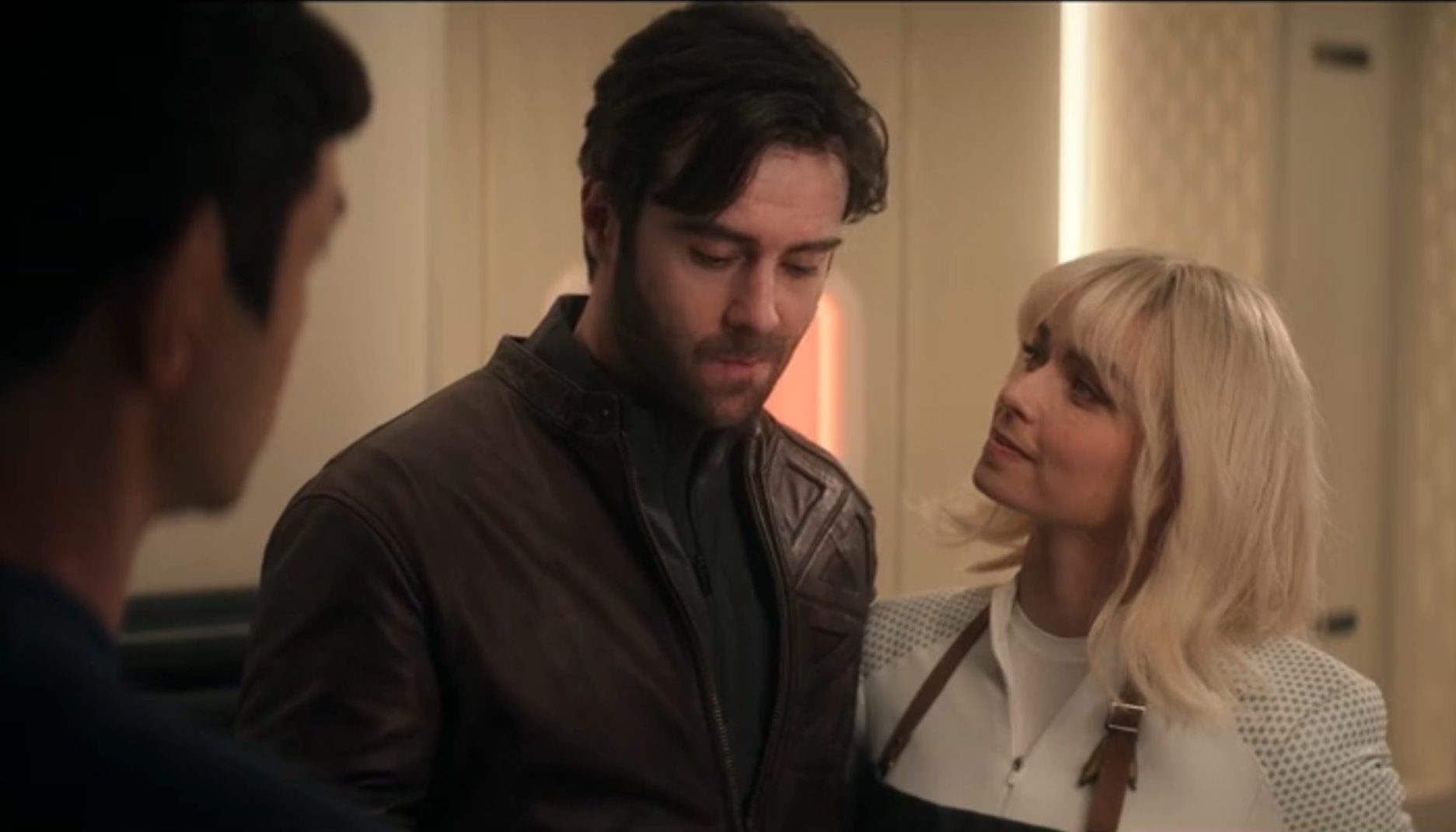
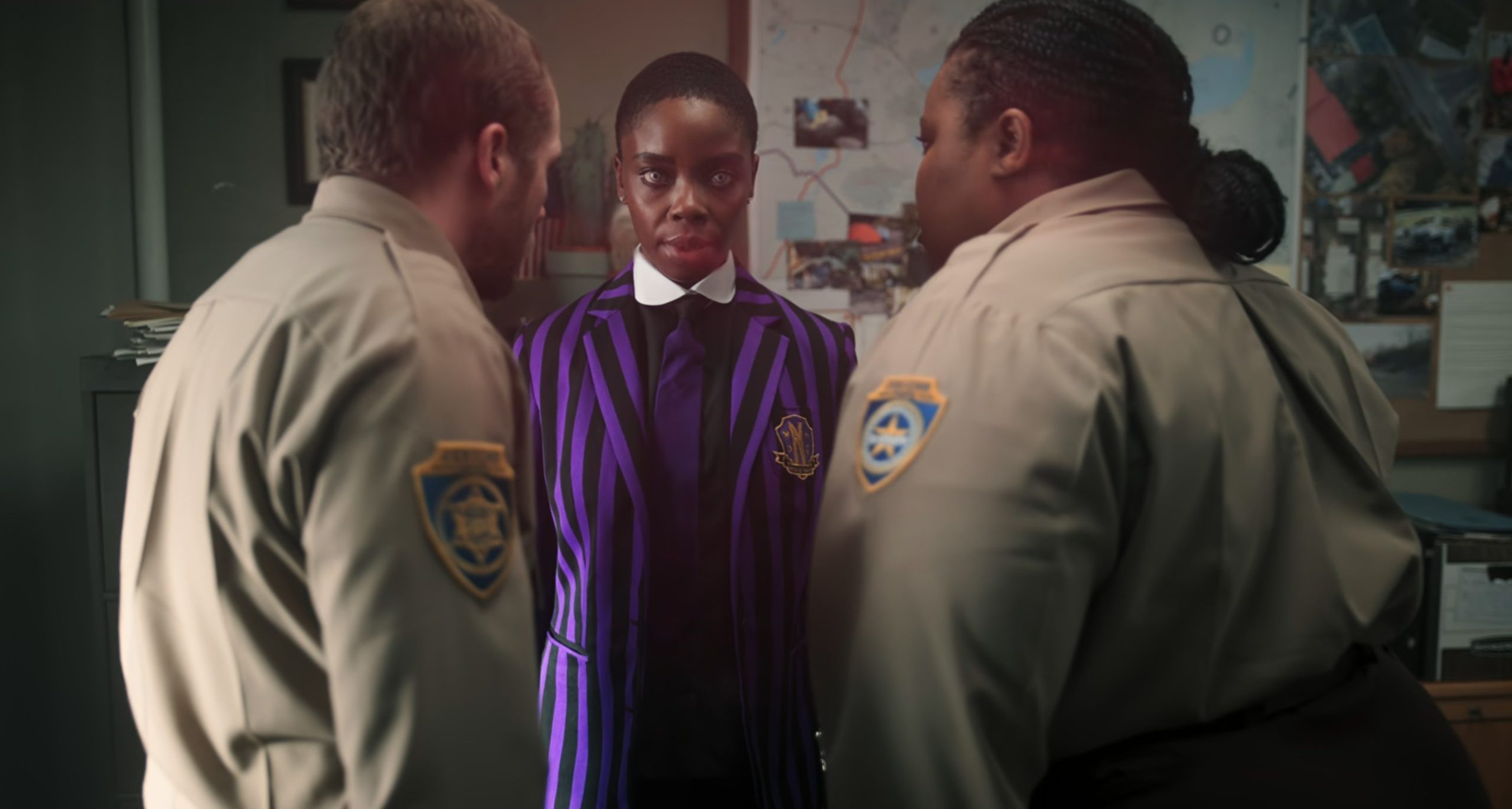
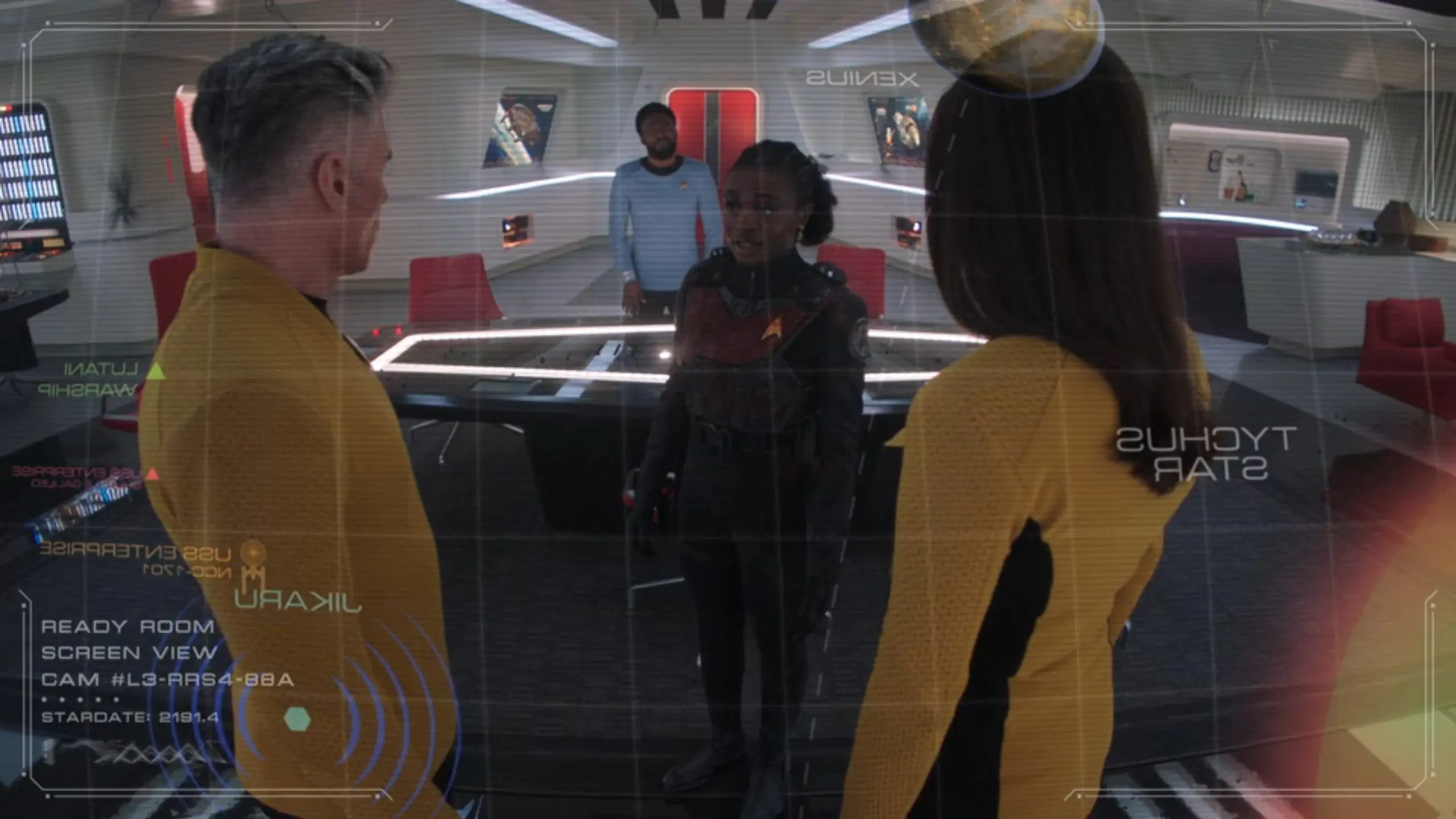





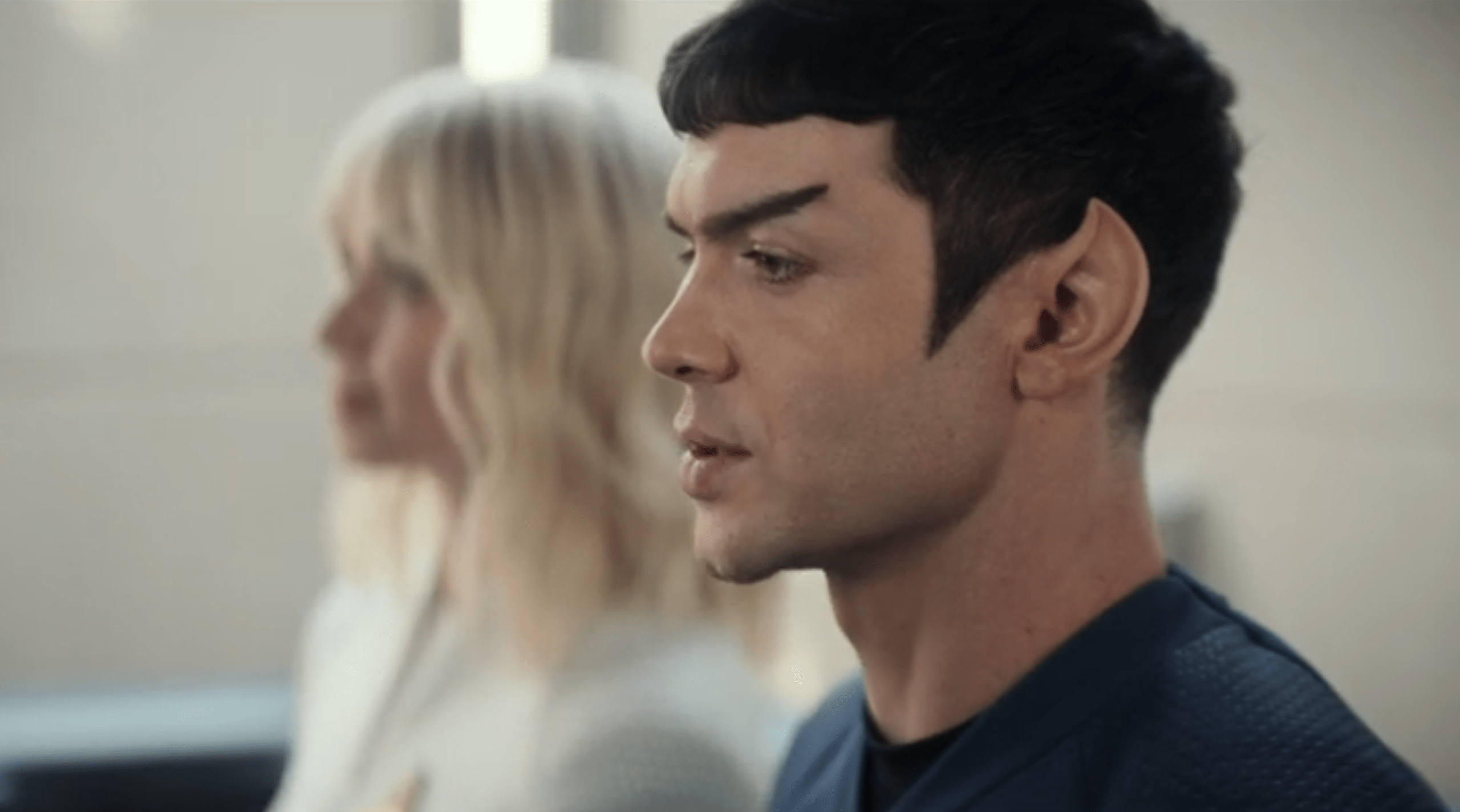

Whether through color, framing, or focus, the camera makes visible what the archetype itself embodies: contrast, attraction, and the tension between distance and connection.
All of these visual choices—the costuming, staging, and camera techniques point to the same conclusion: the similarities are not coincidental. The emotional archetype is carried not just in performance or script, but in the very way the camera frames and centers each character.
Of course, when you watch enough films and series, it becomes easier to spot the echoes between them. Archetypes and visual grammar repeat for a reason—they strike a chord. Recognizing those similarities does not make the characters any less compelling, or the stories any less their own. Each iteration adds its own shade of meaning, shaped by genre, performance, and cultural moment. The fact that these patterns recur across genres only underscores the archetype’s power.
Why These Archetypes Endure
Part of why this archetype holds such power because it reflects real-life dynamics. Many relationships (romantic, platonic, or otherwise) pair the emotionally open with the more reserved, the caretaker with the guarded. At its healthiest, this push and pull becomes a shared path to growth. In its most toxic form, though, it can slip into patterns like narcissist versus codependent or empath. These shows capture the tension in ways that feel deeply familiar, while still steering it toward mutual transformation rather than dysfunction.
In a media landscape where connections are often rushed or oversimplified, duos like these serve as a reminder that difference is not division: it is complementary connection. The balance of stoic and soft, logical and emotional, creates a space where character growth feels earned, and the storytelling potential never runs dry. And with both series still unfolding, we are left in that delicious in-between space, watching to see how far these archetypes bend and whether they hold.
When it comes down to it, the stories these relationships live inside carry so much more depth than just the pairings. Still, it is fair to say that these dynamics act as backbones. Without them, many would be far less invested.
What might look like cliché or overused archetypes are actually narrative devices designed to attract us, because of what they spark in us: we relate, we wish, we wonder.
These stories endure not just for their characters, but because archetypes, narrative tools, and visual language work in concert to shape connection. By looking closely at how “Wednesday” and “Star Trek: Strange New Worlds” test and reframe the stoic/soft dynamic, we see why it remains compelling across genres. Whether the bonds last or fracture, whether they remain platonic or turn romantic, the tension between reserve and openness creates space for growth. And as long as stories keep exploring that space, audiences will keep returning to it.
Want to read the original 2023 version of this article? It is archived here.